 US,
US,  UK
UK  Canada
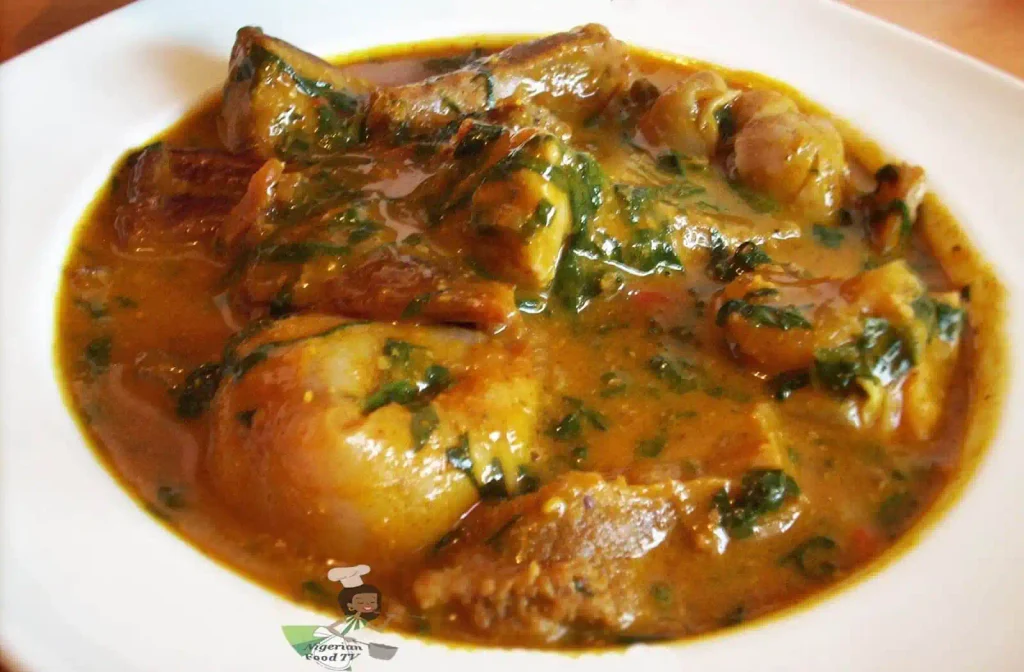
If egusi soup is the soup most people outside Nigeria have heard of, ogbono soup is the one that surprises them — mostly because of its texture. Known for its smooth, stretchy “draw,” ogbono soup is a Nigerian favorite that’s simpler to make than people expect, once you know what you’re working with. Here’s what’s in it, where it comes from, and how to make it wherever you’re currently based.
What Is Ogbono Soup?
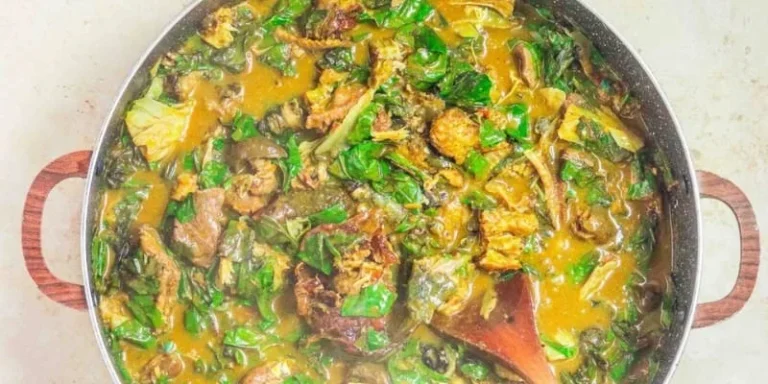
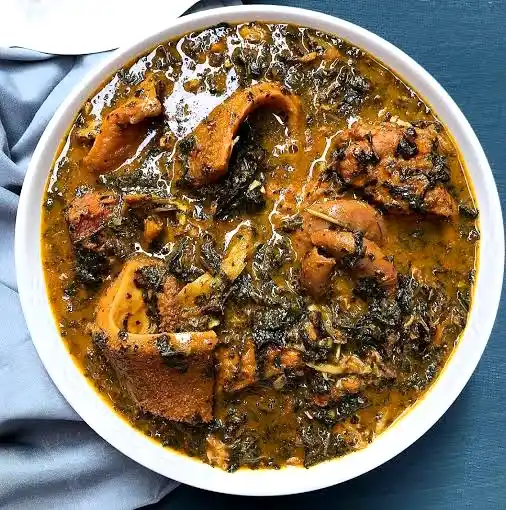
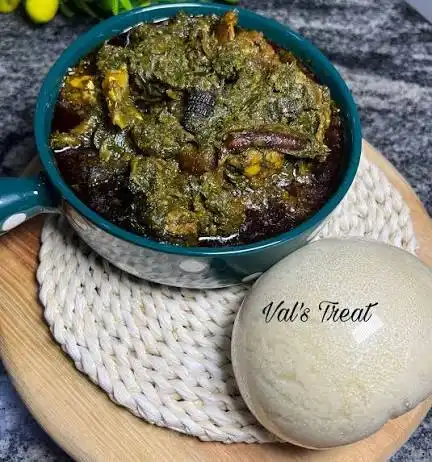
Ogbono soup is a thick Nigerian soup made from ground ogbono seeds — the seeds of the African wild mango (Irvingia gabonensis) — combined with palm oil, meat, fish, leafy vegetables, and pepper. It’s best known for its distinctive “drawy” or stretchy texture, similar in concept to okra soup, which comes naturally from the ogbono seeds themselves as they cook.
Like egusi soup, ogbono soup is a swallow soup — meant to be eaten with fufu, pounded yam, or garri, rather than with rice or bread. You tear off a piece of the swallow, dip it into the soup, and let the stretchy soup coat it as you scoop.
What’s in Ogbono Soup? (Ogbono Soup Ingredients)
Serves 4–6
- 1 cup ground ogbono seeds
- 1/3 cup palm oil
- 1 lb assorted meat (beef, goat meat, or tripe), cut into chunks
- 1/2 lb stockfish or dried fish (optional, but traditional)
- 1/2 lb fresh fish (catfish works well), optional
- 2 cups fresh spinach, ugu (pumpkin leaves), or bitter leaf, chopped
- 1 medium onion, chopped
- 2–3 scotch bonnet peppers (or to taste), blended or chopped
- 2 tbsp ground crayfish
- 2 seasoning cubes (Maggi or Knorr)
- Salt to taste
- Water or meat stock, as needed
Ogbono seeds themselves have a mild, slightly nutty, earthy flavor before cooking — the real character of the soup comes from how they combine with the palm oil, pepper, crayfish, and stock as they simmer.
Where Does Ogbono Soup Come From?
Ogbono soup originates in Nigeria, where it’s especially popular in the eastern and southern regions of the country, though it’s eaten and loved nationwide. The ogbono seed itself comes from the African wild mango tree, native to the rainforest belts of West and Central Africa. The seeds are extracted, dried, and ground — either at home traditionally, or more commonly today, bought already ground and packaged.
How to Make Ogbono Soup
- Season and boil the meat. Place your assorted meat in a pot with chopped onion, a seasoning cube, and salt. Cover with water and boil until tender, about 30–40 minutes. Reserve the stock.
- Heat the palm oil. In a separate pot, heat the palm oil over medium heat until it becomes clear.
- Fry the ogbono. Add the ground ogbono seeds directly into the hot oil, stirring continuously. This step is important — stirring the ogbono while it fries in the oil is what helps develop the smooth, “drawy” texture the soup is known for. Fry for 2–3 minutes.
- Add the stock gradually. Pour in the reserved meat stock a little at a time, stirring continuously to prevent lumps and to build the soup’s signature stretch.
- Add the pepper and crayfish. Stir in the blended scotch bonnet pepper and ground crayfish.
- Add the meat, fish, and stockfish. Stir in the cooked meat, fresh fish, and stockfish. Add the second seasoning cube and adjust salt to taste. Simmer for 10–15 minutes.
- Add the leafy greens last. Stir in your chopped spinach, ugu, or bitter leaf during the final 5 minutes, so they stay vibrant rather than overcooking.
- Serve hot with fufu, pounded yam, or garri on the side.
Tips for Getting Ogbono Soup Right
- Stir continuously while frying the ogbono. This is the single most important step for getting the right texture — rushing it or leaving it unstirred can result in clumping instead of a smooth draw.
- Don’t over-thin it with water. Ogbono soup is meant to be thick; use stock rather than water if you need to loosen the consistency.
- Fresh ogbono makes a difference. If you can find whole ogbono seeds and grind them yourself, the flavor is noticeably fresher than pre-ground versions that have been sitting on a shelf a while — though pre-ground is far more convenient and perfectly fine for everyday cooking.
What Makes Ogbono Soup “Draw”?
That stretchy, slippery consistency comes from the ground ogbono seeds.
When the ground seeds are heated in liquid, they release natural compounds that give the soup its thick, viscous texture.
The stronger the draw, the more noticeable that elasticity becomes when you lift the soup with a spoon.
Different batches of ogbono can behave slightly differently.
Older or poorly stored ogbono may not draw as strongly as fresh, good-quality seeds.
This is one reason ingredient quality matters.
Why Is My Ogbono Soup Not Drawing?
This is probably the most frustrating problem people encounter. A few things may be responsible.
The Ogbono May Be Old
Freshness matters. Ground ogbono that has been stored for a long time can lose quality.
It May Have Been Overcooked or Fried Too Harshly
There are several traditional cooking methods, but excessively frying or scorching the ground seeds can interfere with the result.
There May Be Too Much Liquid
If the pot contains a very large quantity of stock compared with the amount of ogbono, the draw can feel weak.
The Seeds May Be Poor Quality
Not every bag of ground ogbono performs the same way. When possible, buy from a grocery retailer with good product turnover.
How Thick Should Ogbono Soup Be?
There is no universal answer.
Some people like it thick enough that every spoonful feels substantial.
Others prefer a lighter soup with more stock.
What you want to avoid is either extreme:
a watery soup that barely coats the swallow, or a pot so thick that stirring becomes difficult.
Start with less liquid and add more as necessary.
That gives you more control.
Can You Mix Ogbono and Egusi?
Yes.
Some people cook a combination of egusi and ogbono. The egusi provides extra body and a nutty richness, while the ogbono adds draw. How much of each you use depends on which texture you want to dominate.
Finding Ogbono Soup Ingredients in the USA, UK, and Canada
Ground ogbono seeds are commonly stocked at African and Caribbean grocery stores across major cities in all three countries, usually sold in small packets or tubs in the spices and soup ingredients section. (See our full guides on where to buy ogbono in the USA, UK, and Canada.)
Cooking Ogbono Soup in the Diaspora vs. Back Home
Frozen ugu or spinach are normal substitutes for fresh ugu, which isn’t always in stock depending on where you live — neither is a downgrade, just what most diaspora households actually reach for.
Pre-ground ogbono is the practical default, and that’s completely fine. Whole seeds you grind yourself taste fresher, but they’re harder to find outside Nigeria and West Africa, and pre-ground versions from African grocery stores work perfectly well for everyday cooking.
Stockfish is optional — treat it that way. It adds a traditional smoky depth, but it’s often pricier and less available outside major cities in the US, UK, and Canada. The soup still delivers on flavor built around fresh meat, fish, and crayfish alone.
What to Eat Ogbono Soup With
Ogbono soup is traditionally eaten with a swallow, most commonly:
- Fufu — the classic pairing, whose smoothness complements the soup’s stretchy texture.
- Pounded yam — a firmer contrast to the soup’s draw.
- Garri (eba) — a lighter, quicker option for weeknight meals.
One Comment