 US,
 UK
 Canada

African Food Wholesale & Bulk Suppliers | Ship to US, UK & Canada
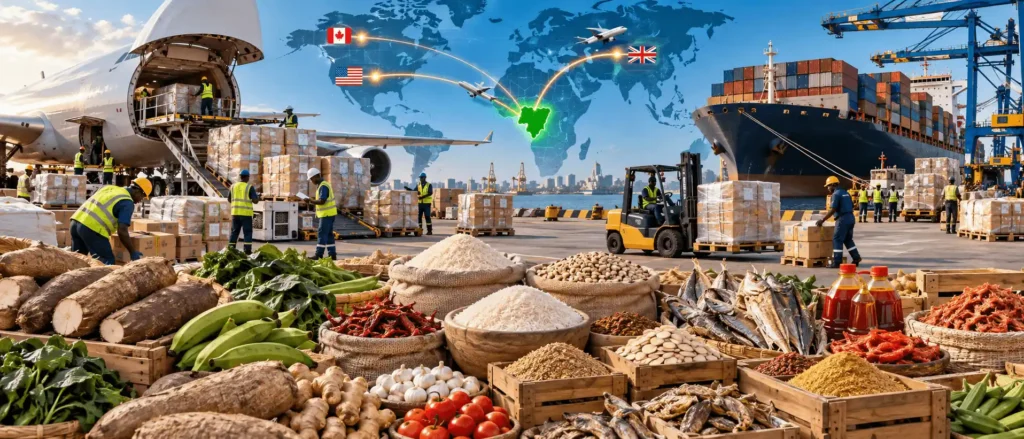
Whether you’re running a restaurant, stocking a grocery store, catering a large event, or just want to buy your household staples in bulk rather than one bag at a time, this page covers wholesale and bulk sourcing for African and Nigerian food products across the USA, UK, and Canada.
Who This Page Is For
This isn’t for everyday home cooking — if you’re looking to buy a single bag of garri or a jar of palm oil for your kitchen, our Where to Buy guides are the right place instead. This page is specifically for:
- Restaurant and catering businesses sourcing ingredients regularly
- Grocery store owners looking to stock African and Nigerian products
- Anyone buying in genuine bulk quantities (cases, pallets, or wholesale lots) rather than single retail units
- Food businesses looking for a manufacturer or private-label supplier
Bulk Cassava Flour
Cassava flour is one of the most searched bulk food products in this category, both as a swallow ingredient and for its growing use in gluten-free baking. If you’re sourcing in bulk, you’ll typically be looking for either a wholesale distributor who carries it alongside other African staples, or a direct cassava flour manufacturer for larger, ongoing orders — manufacturers are the better route if you need consistent supply for a business rather than a one-off bulk purchase. Organic cassava flour in bulk is also a specific, real search category if that’s a requirement for your business.
Bulk Palm Oil
Red palm oil is sourced in bulk primarily by restaurants and grocery stores that go through it quickly. When buying wholesale, confirm you’re getting genuine red (unrefined) palm oil rather than a bleached/refined version — the distinction matters more at bulk volumes, where a mismatch is a bigger loss than a single retail bottle.
Bulk Plantain Chips
A popular bulk item for grocery stores and specialty retailers looking to stock a ready-to-sell snack product, rather than something cooked in-house. If you’re a retailer rather than a food-service business, a plantain chips supplier is usually the more direct route than a general wholesale distributor.
Wholesale African and Caribbean Food Distributors
African and Caribbean food wholesalers often overlap more than people expect — many ingredients (plantain, scotch bonnet, palm oil, stockfish) show up across both cuisines, so a number of wholesale distributors serving Nigerian and West African businesses also carry Caribbean products, and vice versa. If you’re sourcing for a business that serves both communities, it’s worth asking a prospective distributor whether their catalog crosses over before assuming you need two separate suppliers.
Some searches for wholesale distributors also reference specific named companies — Pan African Food Distributors and Asafo African Food Distributors are examples that show up in search data. If you’re looking for a distributor by name rather than by product category, it’s worth searching that company name directly alongside general terms like “African food wholesale distributors near you,” since availability and service area vary by company and region.
Wholesale African Food Distributors by City
Real, specific demand exists for wholesale distributors in several cities across all three countries — people searching specifically for a supplier “near me” or “near you” in these locations:
USA: Atlanta, Philadelphia
UK: London, Birmingham
Canada: Toronto
If you’re in one of these cities, a local wholesale distributor near you typically means lower shipping costs and faster turnaround than sourcing from a distributor based elsewhere — worth prioritizing a local option before looking further afield.
Stockfish and Ponmo Ijebu Wholesale
Both of these are more specialized bulk categories, showing consistent demand across all three markets. Norwegian stockfish wholesale is the most commonly searched specific type, reflecting the reality that most stockfish sold through Nigerian and West African food channels is sourced from Norway. Ponmo ijebu (a specific cured cow skin product) has its own dedicated wholesale search demand — worth knowing if you’re a supplier reading this rather than a buyer, since it’s a genuine, standalone product line rather than a variant of something more generic.
Bulk Egusi and Other Soup Ingredients
Buying egusi in bulk shows up as real, measured demand across all three countries — a natural need for any restaurant or caterer making egusi soup at scale. The same logic applies to other core soup ingredients: if you’re already sourcing in bulk for one dish, it’s worth asking your distributor what else they carry rather than sourcing each ingredient from a different supplier.
What to Ask a Wholesale Supplier Before Ordering
- Minimum order quantity — bulk pricing usually only kicks in above a certain volume, and it varies significantly between suppliers.
- Shipping and storage requirements — some products (fresh or frozen leafy greens, for instance) have very different logistics needs than shelf-stable items like cassava flour or dried stockfish.
- Consistency and sourcing — for something like palm oil, ask specifically whether you’re getting the same product batch to batch, since quality and color can vary between sourcing runs.
- Whether they distribute to your specific city or region — some distributors serve a national footprint, others are genuinely local and won’t ship outside their immediate area.
Top 12 Documents Needed for Hassle-Free Sea & Air Shipment Clearance
If you’re shipping food products internationally — whether exporting in bulk or handling customs clearance for a large order — having the right paperwork in place avoids delays, holds, and unnecessary costs at port. Here are the 12 documents most commonly required:
| # | Document | Purpose |
|---|---|---|
| 1 | Commercial Invoice | Full breakdown of goods and pricing |
| 2 | Packing List | Clear item count, weights, and dimensions |
| 3 | Bill of Lading / Airway Bill | Proof of shipment ownership |
| 4 | Certificate of Origin | Authenticity of product source |
| 5 | Phytosanitary Certificate | Required for plant-based/agricultural items |
| 6 | Fumigation Certificate | Required by some destination countries |
| 7 | Health Certificate | For food safety compliance |
| 8 | NAFDAC Certificate (where applicable) | Product registration proof |
| 9 | Export License | Government approval for international trade |
| 10 | Insurance Certificate | Coverage against shipping risks |
| 11 | Proforma Invoice | For pre-shipment payment and processing |
| 12 | Certificate of Analysis (if needed) | Lab-tested quality report |
Requirements vary depending on the specific product, the destination country, and the shipping method (sea vs. air), so confirm exactly which of these apply to your shipment with your freight forwarder or customs broker before goods leave port — missing even one required document is one of the most common causes of shipment delays and unexpected storage fees.
Top 12 Quality Checklist for Food Products (Sea & Air Shipment)
Every product intended for export should go through a rigorous inspection process to ensure it arrives fresh, clean, and retail-ready — whether it’s traveling by sea or air. Here’s the 12-step quality assurance process worth confirming with any supplier or exporter you’re working with:
| # | Quality Assurance Step |
|---|---|
| 1 | Sourced from certified farms and reliable suppliers |
| 2 | Inspected for freshness, appearance, and natural aroma |
| 3 | Graded and sorted to meet export standards |
| 4 | Cleaned, washed, or dry-processed under hygienic conditions |
| 5 | Screened for pest infestation and foreign particles |
| 6 | Moisture content checked (where applicable) |
| 7 | Packed in food-safe, durable export-grade materials |
| 8 | Securely sealed to prevent tampering or spoilage |
| 9 | Labeled with batch number, expiry date, and origin info |
| 10 | Weighed, recorded, and tracked for full traceability |
| 11 | Final quality check before loading |
| 12 | Export documentation and real-time shipping updates provided |
If you’re sourcing in bulk from any supplier, it’s reasonable to ask directly which of these 12 steps they actually follow — a supplier who can walk through their own quality process step by step is a stronger sign of reliability than one who can’t.
Importing Nigerian Food Products Into the USA, UK & Canada
A quick note before this section: unlike the rest of this page, there’s essentially no measured search demand for this topic among Nigerians living in the US, UK, or Canada. That makes sense once you think about who’s actually searching for it. Someone typing “export food from Nigeria” is almost always based in Nigeria and trying to ship out, not a buyer in Houston or London trying to bring product in. This section exists as practical reference for the business side of sourcing, not as an SEO target.
If you’re a grocery store owner, restaurant, or bulk buyer looking to import Nigerian food products directly rather than buying through a domestic wholesale distributor, here’s what’s genuinely involved.
Regulatory requirements differ significantly by country. In the US, food imports fall under FDA jurisdiction, and depending on the product, additional requirements from the USDA may apply. The UK’s Food Standards Agency governs what can be imported and under what conditions. Canada’s equivalent is the CFIA (Canadian Food Inspection Agency). None of these are simple rubber stamp processes, and requirements vary by product type, so this is genuinely an area where a real conversation with a licensed customs broker or import specialist in your specific country matters more than general guidance can offer.
A licensed customs broker is worth the cost for anything beyond a small, occasional shipment. Brokers handle the regulatory paperwork, customs declarations, and compliance checks on your behalf, and trying to navigate first-time food imports without one is a common source of costly delays and rejected shipments at port.
Product-specific rules matter more than general “Nigerian food” rules. Dried, shelf-stable goods like garri, egusi, or packaged spices generally face fewer restrictions than fresh produce, meat, or dairy products, which often require additional health certifications or may be restricted entirely depending on the country and current regulations.
NAFDAC registration matters on the Nigerian export side. Products leaving Nigeria for commercial import elsewhere typically need proper NAFDAC (National Agency for Food and Drug Administration and Control) registration and certification as part of the documentation trail, alongside the shipment clearance documents covered above.
This connects directly to shipping logistics. Once goods are properly documented and cleared for import, the actual transport follows the same shipping methods covered in our full Shipping Guide, covering container shipping, barrel shipping, and freight options.
If you’re seriously considering importing food products directly rather than sourcing through an existing wholesale distributor, our honest recommendation is to speak with a customs broker or trade compliance specialist in your specific country before committing to a shipment, since the regulatory details genuinely vary enough that general guidance like this can only take you so far.