 US,
 UK
 Canada

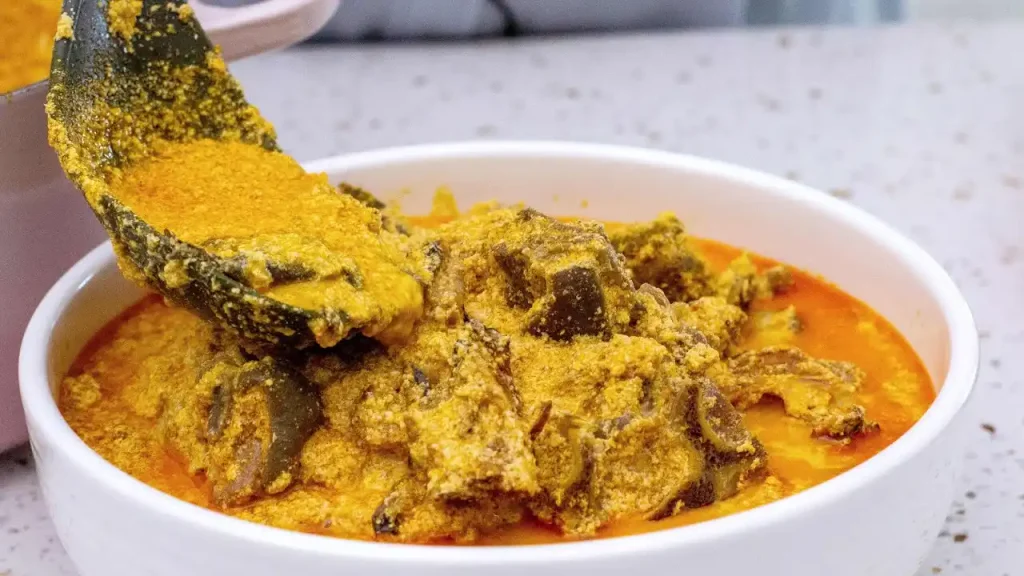
Egusi soup is, for a lot of Nigerians, the soup you measure other soups against. It’s rich, it’s hearty, and depending on which part of Nigeria your family is from, no two pots taste exactly the same. If you’re now living in the US, UK, or Canada and craving the version your mother or grandmother used to make, this guide walks you through it step by step — including where the ingredients might go by a slightly different name at your local African grocery store.
What Is Egusi Soup?
Egusi soup is a thick, savory Nigerian soup made from ground melon seeds (egusi), combined with leafy greens, palm oil, meat, fish, and pepper. It’s eaten with a “swallow” — most commonly fufu, pounded yam, garri, or semovita — which you tear off, roll into a small ball, and use to scoop the soup directly.
The word “egusi” refers specifically to the seeds of a type of melon grown across West Africa, dried and ground into either a fine powder or coarse granules. When cooked, the ground seeds thicken the soup and give it a slightly nutty flavor, while also forming a signature texture that can range from smooth to pleasantly lumpy, depending on the style.
There isn’t one single “correct” egusi soup — it varies significantly by region and ethnic group in Nigeria. Yoruba-style egusi is often lumpy, formed into small clusters that cook in the soup. Igbo-style egusi tends to be more uniformly blended into the soup, and often includes bitter leaf (ugu or onugbu) or spinach. Both are equally “authentic” — the version you grew up with is the right one for you.
Ingredients for Egusi Soup
Serves 4–6
- 2 cups ground egusi (melon seeds)
- 1/2 cup palm oil
- 1 lb assorted meat (beef, goat meat, or tripe), cut into chunks
- 1/2 lb stockfish or dried fish (optional, but traditional)
- 1/2 lb fresh fish (catfish works well), optional
- 2 cups fresh spinach, ugu (pumpkin leaves), or bitter leaf, chopped
- 1 medium onion, chopped
- 2–3 scotch bonnet peppers (or to taste), blended or chopped
- 2 tbsp ground crayfish
- 1 tsp ground pepper (cayenne or chili powder, if crayfish and scotch bonnet aren’t enough heat for you)
- 2 seasoning cubes (Maggi or Knorr)
- Salt to taste
- Water or meat stock, as needed
A note on substitutions: If you’re outside Nigeria and one of these ingredients is hard to find where you live, don’t panic. Fresh ugu (pumpkin leaves) can be swapped for spinach or even collard greens in a pinch. Stockfish can be left out entirely if you can’t source it — the soup will still be delicious with just fresh meat and fish.
How to Make Egusi Soup
- Season and boil the meat. Place your assorted meat in a pot with chopped onion, a seasoning cube, and salt. Cover with water and boil until tender, about 30–40 minutes. Reserve the stock — you’ll use it later in the soup.
- Prepare the egusi. In a bowl, mix the ground egusi with a small amount of water to form a thick, moist paste — just enough liquid to bring it together, not runny.
- Heat the palm oil. In a separate pot, heat the palm oil over medium heat until it becomes clear (traditionally, palm oil is heated until it loses its raw red color — this step matters for flavor, but keep an eye on it so it doesn’t burn).
- Fry the egusi. Add the onion and blended pepper to the hot oil and fry for a few minutes. Then add the egusi paste in spoonfuls, forming small lumps if you want the Yoruba-style texture, or stirring it in fully for a smoother, Igbo-style consistency. Let it fry, stirring occasionally, for about 10 minutes — this step is what develops the deep, slightly nutty flavor egusi soup is known for.
- Add the stock. Pour in the reserved meat stock gradually, stirring to reach your desired consistency — egusi soup is traditionally thick, closer to a stew than a broth.
- Add the meat, fish, and crayfish. Stir in the cooked meat, stockfish, fresh fish, and ground crayfish. Add the second seasoning cube and adjust salt to taste. Simmer for 15–20 minutes, allowing the flavors to combine.
- Add the leafy greens last. Stir in your chopped spinach, ugu, or bitter leaf during the final 5 minutes of cooking, so the greens stay vibrant rather than overcooking.
- Serve hot with fufu, pounded yam, or garri on the side.
Tips for Getting Egusi Soup Right
- Don’t skip frying the egusi. This step is easy to rush, but it’s what separates a flat-tasting soup from one with real depth. Give it the full 10 minutes.
- Adjust the thickness with stock, not water. Water dilutes the flavor; stock keeps it rich even as you loosen the consistency.
- Taste as you go. Seasoning cube brands, palm oil strength, and pepper heat all vary, so adjust salt and pepper at each stage rather than all at once at the end.
- Leftovers taste even better the next day, once the flavors have had time to settle — egusi soup freezes well too, making it a good one to batch-cook.
A Few Things That Commonly Go Wrong
The soup is watery.
Too much stock was probably added too quickly. Let the soup reduce uncovered.
The egusi tastes raw.
It probably did not cook long enough before the liquid was added.
The soup is too oily.
Reduce the amount of palm oil next time. You can also skim some excess oil from the surface.
The vegetables disappeared into the soup.
They were probably added too early or cooked too long.
The flavor feels flat.
Check the quality of your stock, crayfish, fish and seasoning before simply adding more salt.
The soup is unbearably hot.
Too much Scotch bonnet went in. Next time, start small.
Finding Egusi Ingredients in the USA, UK, and Canada
The good news: egusi, palm oil, crayfish, and stockfish are all commonly stocked at African and Caribbean grocery stores across major cities in all three countries, and increasingly available through online African grocery delivery for those outside big cities. (See our full guides on where to buy egusi in the USA, UK, and Canada.)
A few notes depending on where you’re shopping:
- Egusi is usually sold either pre-ground (as a powder) or as whole dried seeds you grind yourself — pre-ground is far more convenient and widely available in the diaspora.
- Palm oil in Western countries sometimes comes bleached/refined rather than the traditional red, unrefined variety — for the most authentic flavor and color, look specifically for “red palm oil.”
- Stockfish can be pricier and harder to find outside major cities; it’s optional, so don’t let its absence stop you from making the soup.
If You Cannot Find Ugu
This is one of the most common problems when recreating Nigerian dishes abroad.
Do not abandon the recipe simply because fresh ugu is unavailable.
Spinach works well and is widely available.
Kale and collard greens are also useful options, especially if you prefer a leaf with more structure.
They are not identical to ugu, so expect a slightly different flavor and texture.
The goal is not to pretend the substitute is exactly the same. It is to make a practical version of the dish with ingredients you can actually find.
What to Eat Egusi Soup With
Egusi soup is traditionally paired with a swallow — the starchy, dough-like food used to scoop it up rather than a spoon. The most common pairings are:
- Fufu — the classic cassava-based swallow.
- Pounded yam — a milder, firmer alternative.
- Garri — a granular cassava product, prepared as eba when eaten hot with soup.
If you’re new to Nigerian food, fufu is the most widely available and easiest starting point in the diaspora.
Cooking Egusi Soup in the Diaspora vs. Back Home
A few adjustments that make this recipe realistic for a kitchen in the US, UK, or Canada, rather than assuming you have everything you’d have back home:
- Skip stockfish without guilt if it’s not available or affordable near you. It’s traditional, but it’s also often the priciest and hardest-to-find ingredient outside major cities. The soup still tastes rich and complete built around fresh meat, fish, and crayfish alone.
- Fresh ugu isn’t always in stock — frozen or spinach both work. Frozen ugu is increasingly available at African grocery stores in all three countries, and spinach is a completely normal substitute that many diaspora households default to, not a downgrade.
- Palm oil color varies by brand and country. Some Western retailers carry refined/bleached palm oil rather than the traditional red, unrefined version. For the closest flavor and color to what you remember, look specifically for “red palm oil” on the label.
- Seasoning cube availability is inconsistent outside big cities. If Maggi or Knorr aren’t on the shelf near you, most bouillon-style seasoning cubes will work as a substitute — adjust salt to taste since strength varies by brand.

25 Comments