 US,
US,  UK
UK  Canada
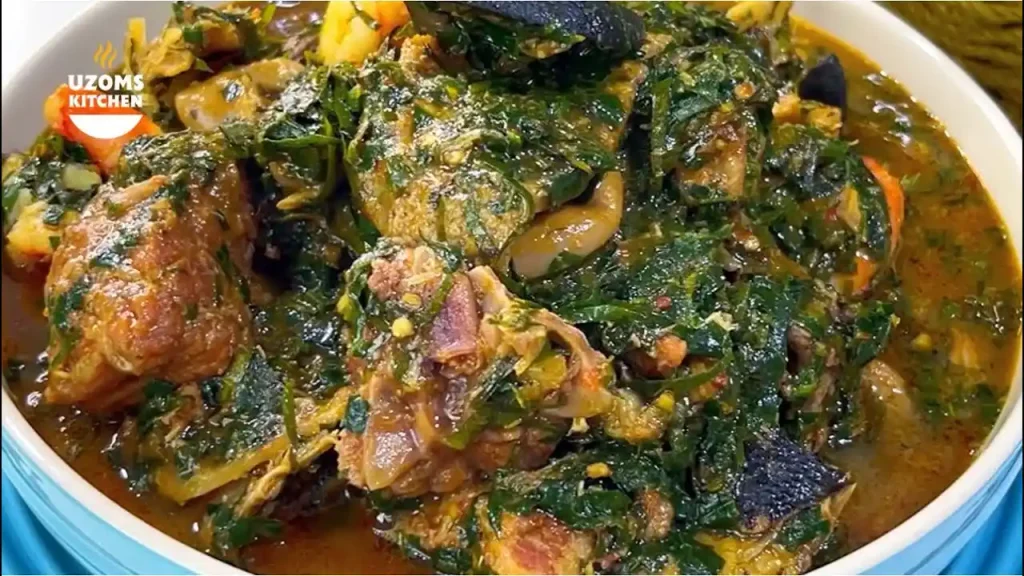
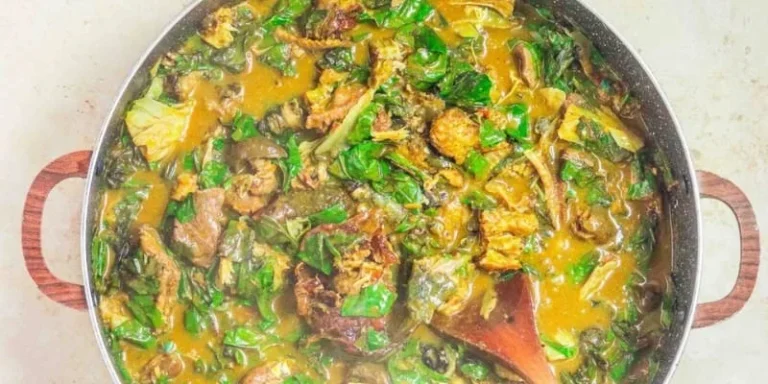
Ofe owerri is one of the more elaborate soups in Igbo cuisine — a vegetable-rich dish loaded with a wider mix of proteins and greens than most other Nigerian soups, traditionally associated with the Owerri area of Imo State. If you’re looking to make one of the more festive, generous soups in Nigerian cooking, here’s the full picture.
What Is Ofe Owerri?
Ofe owerri is a Nigerian soup from Imo State, part of Igbo cuisine, known for combining a wide variety of vegetables — typically ugu (pumpkin leaves), uziza leaves, and okazi or afang leaves together — with an unusually generous mix of proteins, often including assorted meat, stockfish, dried fish, and periwinkle all in the same pot. It’s considered one of the more elaborate, celebratory soups in Igbo cooking, often prepared for special occasions and gatherings rather than as an everyday dish, given the range of ingredients involved.
HOW TO COOK OFE OWERRI: The Nigerian Soup for Rich People | Flo Chinyere
What Is Ofe Owerri Made Of?
Serves 4–6
- 2 cups ugu (pumpkin leaves), chopped
- 1 cup uziza leaves, chopped
- 1 cup okazi or afang leaves, sliced thin
- 1/4 cup palm oil
- 1 lb assorted meat (beef, goat meat, tripe), cut into chunks
- 1/2 lb stockfish or dried fish
- 1/2 lb periwinkle, optional but traditional
- 2 tbsp ground crayfish
- 1 onion, chopped
- 2–3 scotch bonnet peppers, to taste
- Cocoyam or achi, as a light thickener (optional, some versions skip this)
- 2 seasoning cubes
- Salt to taste
The defining feature of ofe owerri compared to other Igbo soups on this site is the sheer combination of ingredients — where oha soup and bitter leaf soup each center on a single primary leaf, ofe owerri deliberately layers several vegetables and proteins together.
How to Make Ofe Owerri
- Season and boil the meat. Place your assorted meat in a pot with chopped onion, a seasoning cube, and salt. Cover with water and boil until tender, reserving the stock.
- Prepare a light thickener, if using. If including cocoyam or achi, prepare it separately as with oha or bitter leaf soup, though some versions of ofe owerri are made without any thickener at all, relying on the vegetables themselves for body.
- Heat the palm oil. In a separate pot, heat the palm oil over medium heat.
- Build the base. Stir in the reserved meat stock, followed by the cooked meat, stockfish, and periwinkle if using.
- Add pepper and crayfish. Stir in the blended scotch bonnet pepper and ground crayfish, along with the second seasoning cube.
- Simmer. Let the mixture cook for 10 minutes to combine the flavors.
- Add the vegetables in sequence. Add the tougher, longer-cooking leaves (like okazi or afang) first, letting them cook for a few minutes, then stir in the ugu and uziza leaves last, since they wilt quickly and are best added close to serving.
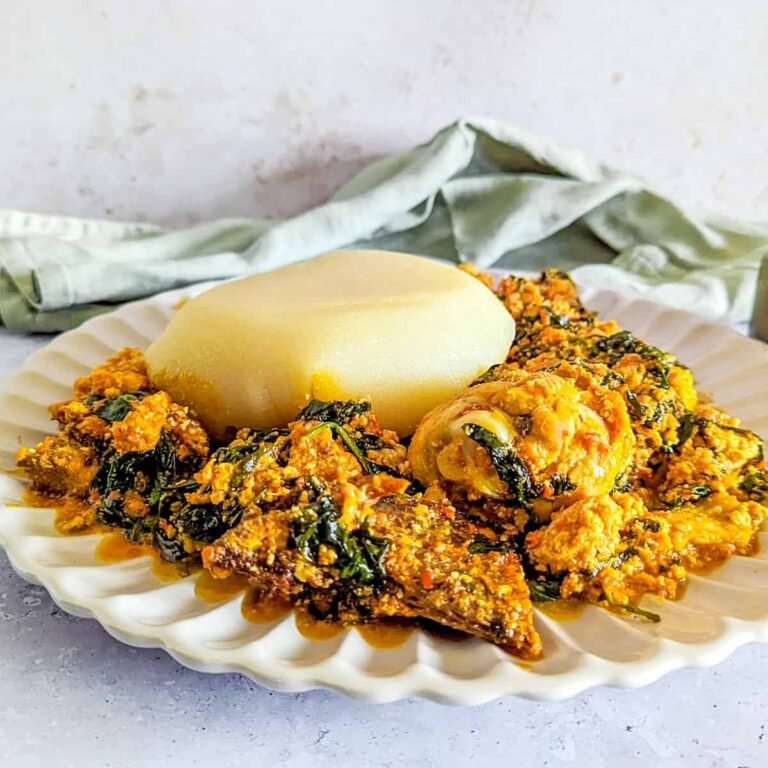
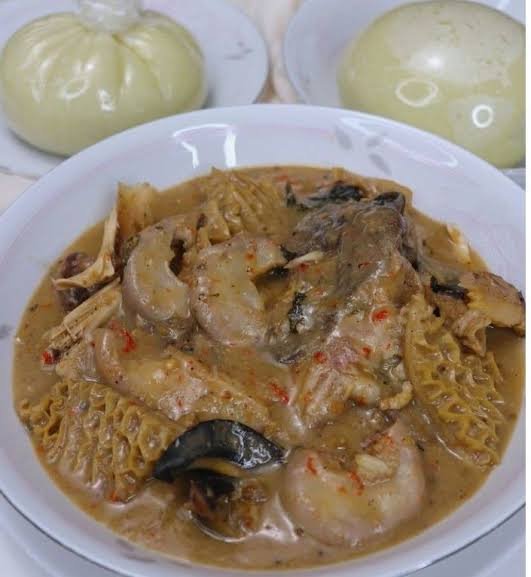
- Serve hot, with pounded yam, fufu, or garri — ofe owerri is traditionally paired with a generous portion of swallow given how substantial the soup itself is.
What Does Ofe Owerri Taste Like?
Ofe owerri has a rich, layered flavor from its combination of vegetables and proteins — more complex than single-leaf soups like oha or bitter leaf, with each vegetable contributing something different: ugu’s mild earthiness, uziza’s peppery aromatic quality, and okazi or afang’s distinctive chewiness. It’s a heartier, more substantial soup overall, often described as one of the more “filling” options in Igbo cuisine given the sheer volume and variety of ingredients in a single pot.
Ofe Owerri vs. Other Igbo Soups
Ofe owerri stands apart from the other Igbo soups on this site in its approach to ingredients:
- Oha soup and bitter leaf soup each center on one specific leaf as the defining ingredient.
- Ofe owerri intentionally combines multiple vegetables and a wider range of proteins in one pot, making it a more elaborate, generous dish rather than one built around a single signature ingredient.
Making Ofe Owerri in the Diaspora vs. Back Home
- This is genuinely one of the more demanding soups to source ingredients for outside Nigeria, given how many specialty vegetables it calls for at once. Well-supplied African grocery stores in larger cities across the US, UK, and Canada are your best bet, and it’s worth checking several before assuming an ingredient isn’t available anywhere near you.
- Simplifying the vegetable mix is a reasonable adjustment, not a failure. Some diaspora households make a version with just ugu and uziza, skipping okazi or afang if they’re not available, and the result is still a genuine, recognizable ofe owerri.
- This is a good soup to plan for a special occasion rather than a spontaneous weeknight meal, both because of the ingredient list and because that’s consistent with how it’s traditionally treated even in Nigeria.
- Consider making it for a larger gathering rather than a small household portion, since the effort of sourcing this many specialty ingredients pays off more when the resulting pot serves a crowd rather than just one or two people.
Finding Ofe Owerri Ingredients in the USA, UK, and Canada
Ugu, uziza, okazi, and afang leaves are all stocked at well-supplied African grocery stores in major cities with a Nigerian community, though availability of the less common leaves (okazi, afang) varies more than everyday staples like ugu. Online African grocery retailers are worth checking if your local store doesn’t carry the full range. (See our directory of African grocery stores by city to find one near you.)
Nutritional Overview
Given its wide mix of leafy greens, ofe owerri is genuinely nutrient-dense — the combination of ugu, uziza, and okazi or afang leaves contributes a broader range of vitamins, minerals, and fiber than a single-vegetable soup would, alongside a strong protein contribution from its varied mix of meat, fish, and periwinkle. It’s one of the more nutritionally well-rounded soups covered on this site, simply by virtue of how many different vegetables and proteins go into a single pot.