 US,
US,  UK
UK  Canada
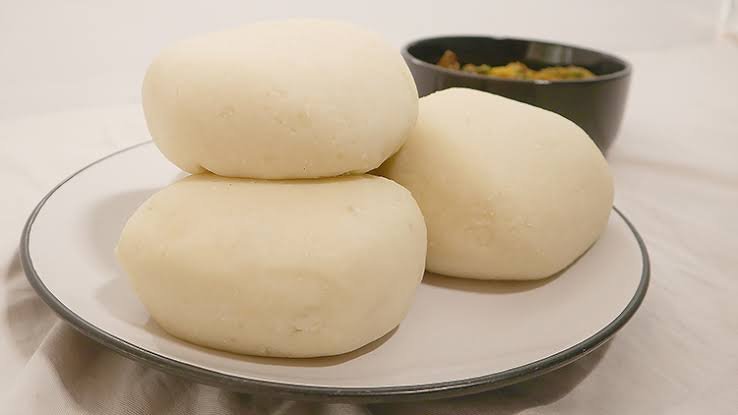
If you grew up in Nigeria, you already know fufu. It’s the soft, stretchy dough your mother pounded by hand, the thing you scooped with your fingers and dipped into a steaming bowl of soup, the food that made a Sunday afternoon feel complete. But if you’re now living in Houston, Manchester, or Toronto, you’ve probably had the experience of standing in a regular grocery store, staring at the shelves, wondering where on earth you’re supposed to find it.
This guide covers everything: what fufu actually is, what it’s made from, the different types you’ll come across, how it’s traditionally prepared, and — because we know this is really why you’re here — where Nigerians in the USA, UK, and Canada actually buy it.
What Is Fufu?
Fufu is a soft, dough-like staple food eaten across West and Central Africa, including Nigeria, Ghana, Cameroon, and the Democratic Republic of Congo. In Nigerian households, it’s usually made by boiling a starchy root vegetable — most commonly cassava, yam, or plantain — and then pounding or mixing it until it becomes smooth, stretchy, and elastic.
Fufu itself doesn’t have a strong flavor on its own. That’s the point. It’s a swallow, meaning it’s designed to be torn into small pieces, rolled into a ball, and used to scoop up a flavorful soup or stew — egusi, ogbono, efo riro, or okra soup are the classic pairings. You don’t chew fufu; you swallow it whole, letting the soup carry the flavor.
In Yoruba, it’s sometimes called iyan (when made specifically from pounded yam) or fufu more generally. In Igbo households, cassava-based fufu is common and often referred to as akpu. The exact name and preparation shifts slightly depending on the region of Nigeria, but the concept stays the same: a smooth, filling base for soup.
What Is Fufu Made Of?
Traditional fufu can be made from several different base ingredients, and this is where a lot of first-time cooks (or curious partners and friends) get confused. Here are the most common versions you’ll encounter:
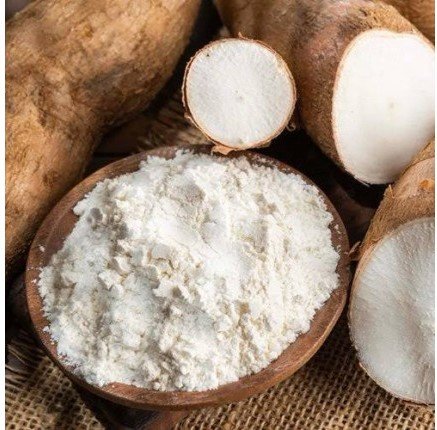
- Cassava fufu — the most widely eaten version in Nigeria, made by fermenting and pounding cassava root, or reconstituting cassava flour (garri or fufu flour) with hot water.
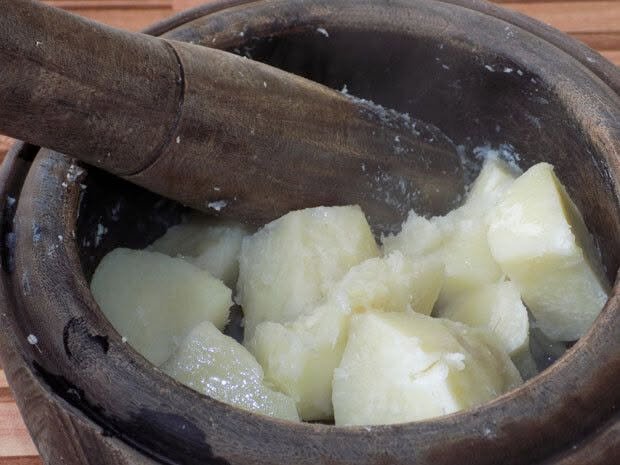
- Pounded yam (iyan) — made from boiled yam pounded until smooth. Traditionally made with a mortar and pestle, though most diaspora households now use yam flour (poundo yam) mixed with hot water.
- Plantain fufu — made from unripe plantains, sometimes combined with cassava, giving a slightly sweeter, denser texture.
- Semovita and amala — not technically “fufu” in the traditional sense, but often grouped with it because they serve the same role at the table: a swallow eaten with soup. Amala is made from yam flour (elubo) or cassava flour, and has a distinct brown color.
In the diaspora, almost nobody starts from scratch with fresh cassava root anymore. Instead, most households use pre-made fufu flour (sometimes labeled “fufu mix” or “instant fufu”), which you mix with hot water and stir until it thickens into the familiar smooth dough. Brands you’ll commonly see on African grocery store shelves include Ayoola, Tropical Sun, Golden Phoenix, and Amoy Sun, among others — availability varies depending on which country and city you’re in.
How Is Fufu Traditionally Made?
The traditional method — the one your grandmother or great-grandmother likely used — looks like this:
- Peel, ferment sieve and boil the cassava, yam, or plantain until soft.
- Pound it in a large wooden mortar with a pestle, usually taking turns between two people, until it becomes a smooth, stretchy mass with no lumps.
- Shape it into a ball while it’s still warm, then serve it alongside a bowl of hot soup.
This method is still used in many homes in Nigeria today, but it’s physically demanding and time-consuming — which is exactly why fufu flour became so popular, especially outside Nigeria. The instant version simplifies the process to just three steps:
- Boil water in a pot.
- Stir in the fufu flour gradually, using a wooden turning stick (or a sturdy spoon), until it thickens into a smooth, lump-free dough.
- Let it firm up for a minute, then shape it into balls for serving.
The whole process takes under 10 minutes with instant flour, compared to well over an hour with fresh cassava or yam.
What Does Fufu Taste Like?
On its own, fufu is mild, slightly starchy, and almost neutral in flavor — similar in concept to how plain rice or bread doesn’t carry much flavor by itself. Its texture is what stands out: smooth, soft, and stretchy, somewhere between dough and a very thick porridge. The real flavor comes from whatever soup you’re eating it with. This is one of the most common questions people unfamiliar with Nigerian food ask, and it’s worth knowing so you’re not caught off guard the first time you try it (or the first time you explain it to a curious coworker or in-law).
Is Fufu Healthy?
Fufu is calorie-dense and a good source of carbohydrates, which made it historically valuable as a filling, energy-sustaining staple for physically demanding days. Cassava-based fufu is naturally gluten-free, which matters to some in the diaspora managing gluten sensitivities. That said, it’s relatively low in fiber and protein on its own — which is exactly why it’s traditionally never eaten alone, but always alongside a soup loaded with vegetables, protein (meat, fish, or beans), and healthy oils. If you’re tracking carbohydrate intake, portion size is the main thing to watch, since fufu servings in many households are generous.
Fufu vs. Pounded Yam vs. Garri: What’s the Difference?
These three get mixed up constantly, especially by people newer to Nigerian food, so here’s the quick breakdown:
- Fufu (cassava-based) has a smooth, slightly sour, stretchy texture from the fermentation process.
- Pounded yam is made purely from yam, has a milder taste, and a slightly firmer, less elastic texture than cassava fufu.
- Garri is a granular, toasted cassava product — you can eat it soaked in cold water with sugar and groundnuts (a snack called “garri soaking”), or you can turn it into a swallow (sometimes called eba) by mixing it with hot water, which gives it a texture closer to fufu, but slightly grainier.
If you’re new to Nigerian food and only try one, cassava fufu or pounded yam are the two most commonly served at Nigerian gatherings in the US, UK, and Canada.
Where to Buy Fufu in the USA
Fufu flour is widely available at African and Caribbean grocery stores across most major US cities with a Nigerian or West African community — think Houston, Atlanta, Dallas, Chicago, New York, and Washington DC. It’s also increasingly available through online African grocery retailers that ship nationwide, which is especially useful if you’re in a smaller city without a dedicated African store nearby. (See our full guide to where to buy fufu flour in the USA for city-by-city store listings.)
Where to Buy Fufu in the UK
In the UK, fufu flour is a staple item at most African and Caribbean grocers, particularly in cities with large Nigerian communities like London, Manchester, Birmingham, and Liverpool. Peckham and Woolwich in London are especially well known for African food shopping. Several UK-based online African grocery retailers also ship fufu flour nationwide for those outside major cities. (See our full guide to where to buy fufu flour in the UK.)
Where to Buy Fufu in Canada
Canadian cities including Toronto, Ottawa, Calgary, Edmonton, and Winnipeg all have African grocery stores carrying fufu flour, often alongside other Nigerian staples like egusi, ogbono, and palm oil. As with the US and UK, online African grocery delivery has made it much easier for Nigerians in smaller Canadian cities to get fufu flour without a long drive. (See our full guide to where to buy fufu flour in Canada.)
What to Eat Fufu With
Fufu is almost never eaten alone — it’s a vehicle for soup. The most popular pairings include:
- Egusi soup — a thick soup made from ground melon seeds, leafy greens, and meat or fish.
- Ogbono soup — made from ground ogbono (wild mango) seeds, known for its distinctive draw or “stretch.”
- Efo riro — a rich Yoruba spinach and pepper stew.
- Okra soup — a lighter, slightly slimy soup made from fresh or ground okra.
- Banga soup — a palm-nut based soup popular in the Niger Delta region.
Making Fufu in the Diaspora vs. Back Home
If you grew up watching fufu get pounded by hand, the version most Nigerian households in the US, UK, and Canada make today looks pretty different — and that’s completely normal, not a lesser version. A few adjustments worth knowing:
- Instant flour is the norm, not a shortcut you should feel bad about. Pounding fresh cassava is rare in the diaspora simply because fresh cassava root is harder to find and the process takes real time most people don’t have on a weeknight. Fufu flour gets you the same result in under 10 minutes.
- Texture may take a try or two to get right. Water quality, stove heat, and flour brand all vary more than they would back home, so don’t be surprised if your first batch is lumpier or looser than you remember — adjusting the water ratio slightly usually fixes it.
- Brand matters more than you’d expect. Since most people are using packaged flour rather than fresh cassava, the specific brand available at your local African store will shape the taste and texture more than it would if you were pounding it fresh — it’s worth trying a couple of brands to find the one closest to what you grew up with.



One Comment