 US,
US,  UK
UK  Canada
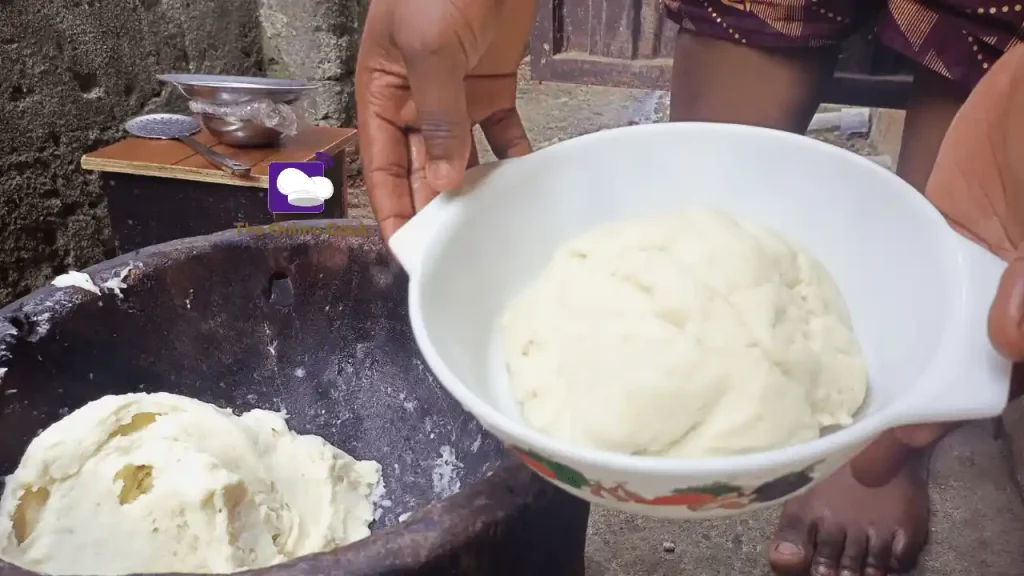
Pounded yam holds a special place at the Nigerian table — for a lot of families, it’s the swallow reserved for special occasions, Sunday dinners, or the dish you request specifically when you’re back home visiting. If you’re now in the US, UK, or Canada and searching for what it actually is, whether it’s the same thing as fufu, or where to buy the flour, this guide answers it all in one place.
What Is Pounded Yam?
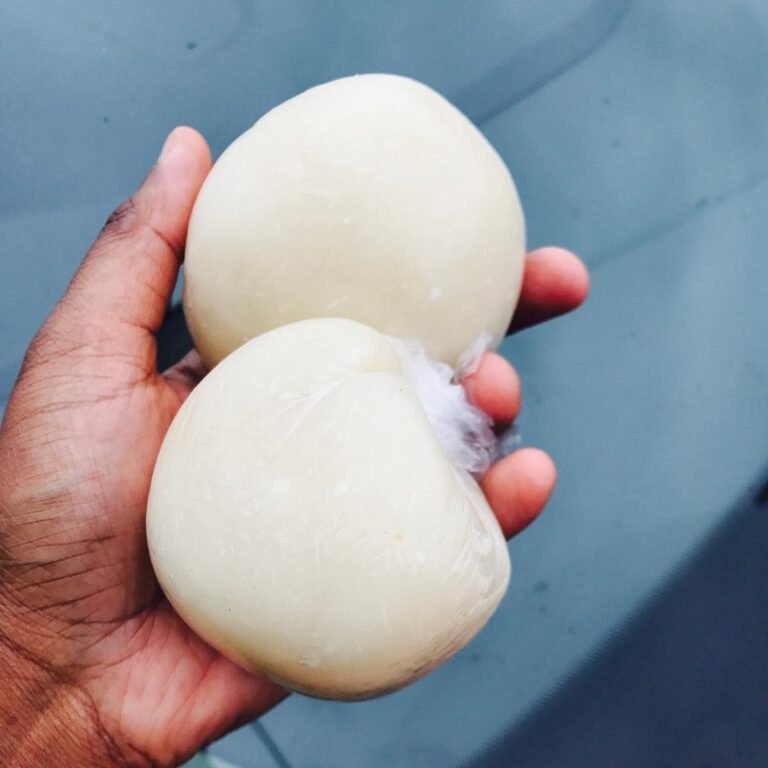
Pounded yam — called iyan in Yoruba — is a smooth, stretchy swallow made by boiling yam tubers until soft, then pounding them into a dense, elastic dough. It’s eaten the same way as fufu: torn into pieces, rolled into a ball, and used to scoop up a bowl of soup rather than eaten with a spoon, fork, or knife.
Where Is Pounded Yam From?
Pounded yam originates in West Africa, where yam has been a cultivated staple crop for thousands of years, particularly across Nigeria, Ghana, and neighboring countries. In Nigeria specifically, it’s most strongly associated with Yoruba cuisine, though it’s eaten and loved across nearly every ethnic group in the country. Historically, it was made purely by hand-pounding boiled yam in a large wooden mortar — a labor-intensive process that gave the dish its name and its reputation as a food worth the effort.
Is Pounded Yam the Same as Fufu?
This is one of the most searched questions about pounded yam, and the short answer is: no, but they’re closely related. Both are swallows eaten with soup, and both are made using a similar boil-and-mash technique, but they come from different roots:
- Pounded yam is made purely from yam. It has a milder flavor, a firmer texture, and a pale, off-white color.
- Fufu, in the specific Nigerian sense, is typically made from cassava, giving it a slightly sour, more stretchy texture from the fermentation process cassava undergoes.
In everyday conversation, some people use “fufu” loosely to describe any swallow, including pounded yam — which is exactly why the question “is pounded yam fufu” comes up so often. Strictly speaking, though, they’re two different foods made from two different root vegetables, and most Nigerian households treat them as distinct dishes rather than interchangeable names for the same thing.
Is Pounded Yam Good for You?
Pounded yam is a carbohydrate-dense staple, similar in nutritional profile to other root-based swallows like fufu. It provides:
- A significant source of energy through starch and carbohydrates
- Naturally no gluten, since yam contains no wheat
- Some fiber and micronutrients, though the amount is reduced compared to eating yam in its whole, unprocessed form
- Relatively low protein and fat on its own
As with fufu, pounded yam is traditionally eaten alongside a soup rich in vegetables, protein (meat, fish, or beans), and healthy oils, which balances out the meal. If you’re monitoring carbohydrate intake, portion size is the main consideration, since servings in many households are generous.
How Is Pounded Yam Made?
The traditional method:
- Peel and cut a yam tuber into chunks.
- Boil the yam in water until completely soft — you should be able to easily pierce it with a fork.
- Drain and pound the boiled yam in a mortar with a pestle until it becomes a smooth, lump-free, stretchy mass. This traditionally takes real physical effort and is often done in turns between two people.
- Shape into a ball and serve immediately while warm.
The diaspora-friendly method, using poundo yam flour:
Most Nigerians outside Nigeria use instant poundo yam flour rather than fresh yam, since it’s faster and fresh Nigerian white yam can be expensive or hard to find outside major cities.
- Boil water in a pot.
- Gradually stir in the poundo yam flour using a wooden turning stick or a sturdy spoon, mixing continuously to avoid lumps.
- Keep stirring and folding until it reaches a smooth, thick, dough-like consistency.
- Let it firm up for a moment, then shape into balls for serving.
Want the full step-by-step with exact measurements and troubleshooting tips? See our complete pounded yam recipe guide.
Poundo Yam Flour: What to Look For
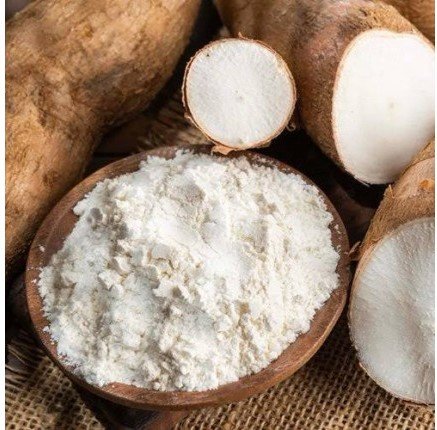
Poundo yam flour (sometimes just called pounded yam flour) is the pre-dried, ground form of yam used to make pounded yam without the pounding. It’s the version almost every household in the US, UK, and Canada actually uses day to day. When shopping for it, you’ll come across several brands on African grocery store shelves — Ola Ola is one of the more widely recognized names, alongside others depending on your region. Quality and taste can vary noticeably between brands, so it’s worth trying a couple to find the one your household prefers, especially for the smoothness of the finished swallow.
Where to Buy Pounded Yam Flour in the USA
Poundo yam flour is stocked at most African grocery stores in cities with a sizable Nigerian or West African population, including Houston, Atlanta, Dallas, Chicago, and New York. Fresh Nigerian white yam is less consistently available and often pricier, but can usually be found at the same stores, sometimes labeled simply as “yam” or “African yam” to distinguish it from the orange sweet potatoes commonly sold as “yams” in US supermarkets. (See our full guide to where to buy poundo yam in the USA, and our directory of African grocery stores by city.)
Where to Buy Pounded Yam Flour in the UK
Poundo yam flour and fresh yam are both widely available at African and Caribbean grocers across the UK, especially in London, Manchester, and Birmingham. Several UK African grocery retailers also ship poundo yam flour nationwide for those outside major cities. (See our full guide to where to buy poundo yam in the UK.)
Where to Buy Pounded Yam Flour in Canada
Canadian cities including Toronto, Ottawa, and Calgary have African grocery stores stocking poundo yam flour, though fresh yam is less consistently available than the instant flour version. (See our full guide to where to buy poundo yam in Canada.)
What to Eat Pounded Yam With
Pounded yam pairs with the same soups as fufu — the choice comes down to personal or family preference, not a strict rule:
- Egusi soup — the most classic pairing.
- Ogbono soup — prized for its smooth, “drawy” texture alongside pounded yam’s firmness.
- Efo riro — a rich Yoruba spinach and pepper stew.
Making Pounded Yam in the Diaspora vs. Back Home
- Poundo yam flour has become the default, and that’s fine. Fresh Nigerian white yam is often pricier and less consistently stocked outside major cities than cassava products are, which is exactly why most households in the US, UK, and Canada reach for the instant flour rather than pounding fresh yam by hand.
- Watch for mislabeled “yams” at mainstream grocery stores. In the US especially, the orange tubers sold as “yams” in regular supermarkets are actually a type of sweet potato, not the starchy white yam used for pounded yam. Look for “African yam,” “white yam,” or “Nigerian yam” at an African grocery store instead.
- Brand experimentation is normal and expected. Since you’re likely relying on packaged flour rather than fresh yam, trying a few different brands (Ola Ola and others) to find the smoothest, closest-to-home texture is a completely typical part of settling into diaspora cooking, not a sign you’re doing it wrong.



One Comment