 US,
US,  UK
UK  Canada
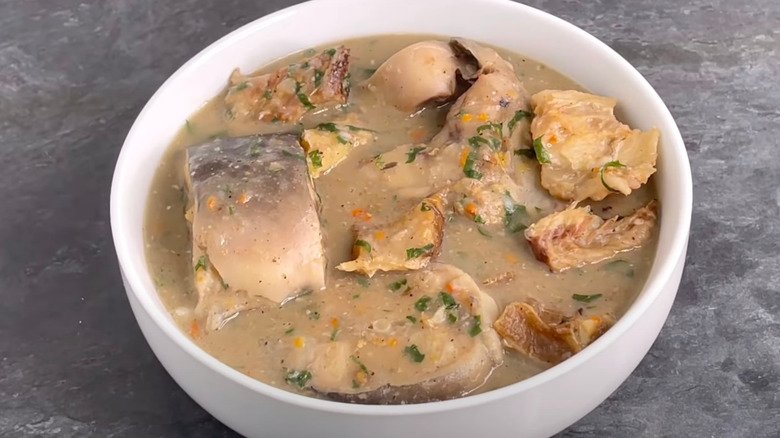
Nsala soup — often called “white soup” for its distinctly pale color — is one of the more unusual soups in Nigerian cuisine, made entirely without palm oil. If you’ve never made a Nigerian soup that skips palm oil before, this one is worth understanding on its own terms.
What Is Nsala Soup?
Nsala soup, widely known as white soup in English, is a Nigerian soup traditionally made from catfish, yam as a thickener, and a distinctive blend of spices, cooked entirely without palm oil — which is exactly what gives it its pale, light color and sets it apart from nearly every other soup in Nigerian cuisine. It originates from the Niger Delta and Igbo culinary traditions, closely related in spirit to pepper soup but with its own specific thickening method and flavor profile.
What Is Nsala Soup Made Of?
Serves 4–6
- 1 medium yam, peeled and cut into chunks (used as the thickener)
- 1–1.5 lbs fresh catfish, cleaned and cut into pieces
- 1/4 cup uziza seeds, ground
- 1 tbsp ground crayfish
- 1 onion, chopped
- 2–3 scotch bonnet peppers, to taste
- Uziza leaves, fresh, for garnish (optional but traditional)
- 2 seasoning cubes
- Salt to taste
Notice what’s missing compared to most other Nigerian soups on this site: no palm oil, and no ground egusi or ogbono seeds. Nsala’s body comes entirely from boiled and pounded yam, which is what gives it a thick consistency without any added fat from oil.
How to Make White Soup | The Most Delicious Ofe Nsala Soup Recipe!
How to Make Nsala Soup
- Boil the yam. Peel and boil the yam chunks in a separate pot until completely soft.
- Pound or blend the yam. Once soft, pound or blend the yam into a smooth paste — this becomes the soup’s thickening base.
- Start the soup base. In your main pot, bring water to a boil with the chopped onion and a seasoning cube.
- Add the catfish. Gently place the catfish pieces into the simmering water and cook until nearly done, being careful not to over-stir, since catfish breaks apart easily.
- Add the yam paste. Stir in spoonfuls of the pounded yam paste, allowing it to dissolve and thicken the soup gradually to your preferred consistency.
- Season. Add the ground uziza seeds, crayfish, blended pepper, and the second seasoning cube. Adjust salt to taste.
- Simmer briefly, then finish with fresh uziza leaves just before serving, if using.
- Serve hot, often on its own as a light meal, or with a small side of rice.
What Does Nsala Soup Taste Like?
Nsala soup has a light, peppery, aromatic flavor, with the ground uziza seeds contributing a distinctive, slightly warming, peppery note different from the heat of scotch bonnet alone — similar in spirit to how uziza adds character to pepper soup. Without palm oil, the soup tastes noticeably lighter and cleaner than richer options like egusi or banga, letting the catfish and spice blend take center stage rather than being layered under a heavier oil base.
Nsala Soup vs. Pepper Soup: What’s the Difference?
These two are often mentioned together since both are light, broth-style soups built around aromatic spice blends rather than palm oil:
- Pepper soup is thin and broth-like, with no thickener, built around the pepper soup spice blend (uda, ehuru, alligator pepper).
- Nsala soup is noticeably thicker, thanks to the pounded yam base, and leans more heavily on uziza specifically rather than the broader pepper soup spice mix.
Both are considered lighter, more delicate soups compared to the richer, palm-oil-based dishes that dominate most of Nigerian cuisine.
Making Nsala Soup in the Diaspora vs. Back Home
- Fresh catfish is genuinely easy to find at most regular supermarkets across the US, UK, and Canada, making this one of the more accessible specialty soups to source proteins for.
- Uziza seeds may take a specific trip to an African grocery store, since they’re less commonly stocked than more mainstream Nigerian spices — worth checking online African grocery retailers if your local store doesn’t carry them.
- Yam sourcing follows the same rule as pounded yam: look for “African yam” or “white yam” specifically, since the orange tubers labeled “yam” at many Western supermarkets are actually a type of sweet potato and won’t produce the right texture.
- This soup is a good option if you’re trying to eat a bit lighter without giving up a genuine, comforting Nigerian meal — worth keeping in mind if palm-oil-heavy soups feel like too much on a given week, since nsala delivers real flavor without that richness.
Finding Nsala Soup Ingredients in the USA, UK, and Canada
Fresh catfish, uziza seeds, and uziza leaves are stocked at African grocery stores across major cities with a Nigerian community in all three countries, with catfish also commonly available at regular supermarkets. (See our directory of African grocery stores by city to find one near you.)
Where Does Nsala Soup Come From?
Nsala soup traces back to the Niger Delta and Igbo culinary traditions of southeastern Nigeria, sharing regional roots with dishes like banga soup, though its palm-oil-free preparation puts it in a completely different category. It’s traditionally valued as a lighter alternative within a cuisine that leans heavily on rich, oil-based soups, and is sometimes specifically prepared for those recovering from illness or for new mothers postpartum, in a similar spirit to how pepper soup is associated with comfort and recovery in Nigerian food culture.
Nutritional Overview
Because it skips palm oil entirely, nsala soup is noticeably lower in fat than most other Nigerian soups, while still delivering a strong source of protein from the catfish. The pounded yam thickener contributes complex carbohydrates rather than the fats and oils that thicken richer soups, making nsala a genuinely lighter option for anyone looking to enjoy Nigerian cuisine with less oil, without giving up the soup-and-swallow (or soup-on-its-own) format entirely.