 US,
US,  UK
UK  Canada
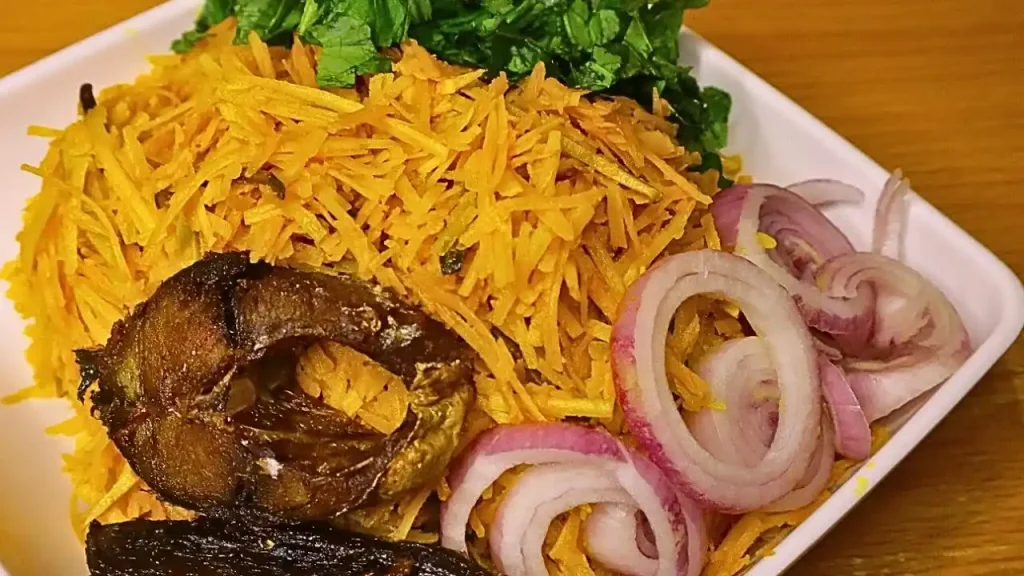
Abacha, often called African salad outside Nigeria, is one of the few well known Nigerian dishes that’s served cold rather than hot. That alone makes it stand out on a menu full of soups and stews, and it’s exactly why it’s become a go to dish for gatherings where food needs to sit out for a while without losing its appeal.
What Abacha Actually Is
Abacha is made from dried, thinly shredded cassava, soaked to soften before being mixed with a dressing built on red palm oil, ground crayfish, pepper, and a distinctive ingredient called ugba (fermented oil bean seed), which gives the dish a slightly funky, savory depth that’s hard to replicate with anything else. It’s closely associated with Igbo cuisine and is typically served as a starter, a snack, or a light meal rather than a main course.
How to Make African Salad (Abacha) – ZEELICIOUS FOODS
Abacha Ingredients
Serves 4 to 6
- 1 lb dried shredded cassava (abacha)
- 1/2 cup red palm oil
- 1/2 cup ugba (oil bean seeds), sliced
- 1/4 cup ground crayfish
- 2 to 3 scotch bonnet peppers, chopped or blended
- 1 small onion, sliced
- A handful of garden egg leaves or utazi leaves, thinly sliced
- Ponmo (cow skin) or dried fish, optional
- Salt and seasoning cubes to taste
How to Make Abacha
- Soak the dried cassava. Cover the shredded cassava in warm water and let it soften for about 10 to 15 minutes, until pliable but not mushy. Drain thoroughly.
- Prepare the palm oil dressing. Warm the red palm oil gently, just enough to loosen it if it’s solidified, and mix in the ground crayfish, chopped pepper, and a pinch of salt.
- Combine. Pour the palm oil mixture over the drained cassava and toss thoroughly until every strand is coated. This is the step that determines whether the final dish tastes flat or genuinely good, since the cassava itself is quite neutral and depends entirely on being evenly dressed.
- Add the ugba and vegetables. Fold in the sliced ugba, onion, and garden egg or utazi leaves, along with ponmo or dried fish if using.
- Adjust and serve. Taste and adjust salt or pepper as needed. Abacha is traditionally served at room temperature rather than chilled or hot, so there’s no need to refrigerate it before serving unless you’re making it well ahead of time.
Why Ugba Matters So Much Here
If you leave out the ugba, you’ll still have something edible, but it won’t taste like real abacha. Ugba’s fermented, slightly bitter, savory quality is a defining flavor of the dish, playing a similar role to how iru does in efo riro, a small ingredient that carries a disproportionate amount of the dish’s actual character. It’s worth seeking out specifically rather than skipping it or treating it as optional.
Making Abacha Outside Nigeria
Dried shredded cassava for abacha is a specific product, distinct from cassava flour or garri, and it’s really only found at African grocery stores rather than regular supermarkets. Ugba is the ingredient most likely to require a dedicated trip too, since it’s a fairly specialized product even within African grocery stores, sometimes sold frozen or in sealed packets rather than fresh. Ponmo can be substituted with dried fish or left out entirely if it’s not available, without changing the core character of the dish the way skipping ugba would.
Our Where to Buy guides are a good starting point if you’re not sure which stores near you are likely to stock these more specialized items.
Where Abacha Comes From
Abacha is deeply tied to Igbo culinary tradition in southeastern Nigeria, where it’s been a staple dish for generations, particularly in Anambra and surrounding states. What’s interesting about it is how it bridges everyday eating and celebration, since it’s common enough to be made as a casual snack, but also shows up at weddings, funerals, and other significant gatherings, usually prepared in large batches since it holds up well once dressed and doesn’t need to be served immediately. Street vendors in many Nigerian cities also sell freshly made abacha, garnished generously and wrapped for a quick, satisfying meal on the go, similar in spirit to how ewa agoyin functions as accessible, everyday street food rather than something reserved for special occasions.
Quick Questions
Is abacha the same as African salad? Yes, African salad is simply the common name for abacha used outside Nigeria, referring to the same dish.
What does abacha taste like? Tangy and savory, with a distinct richness from the palm oil and crayfish, and a slightly funky depth from the ugba. The texture is chewy rather than soft, closer to a salad than a typical Nigerian soup or stew.
Can I make abacha without ugba? You can, but it changes the dish significantly. Ugba is one of the defining flavors of authentic abacha, and leaving it out results in something noticeably flatter tasting.
Is abacha served hot or cold? Neither exactly. It’s traditionally served at room temperature, which is part of what makes it practical for parties and gatherings where food needs to hold up for a while.