 US,
US,  UK
UK  Canada
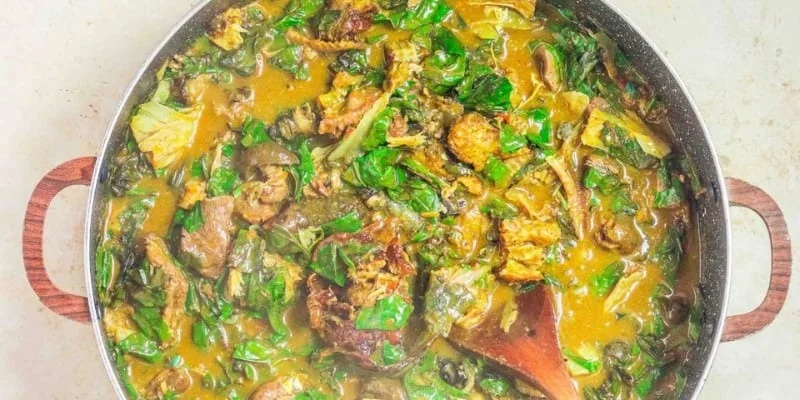
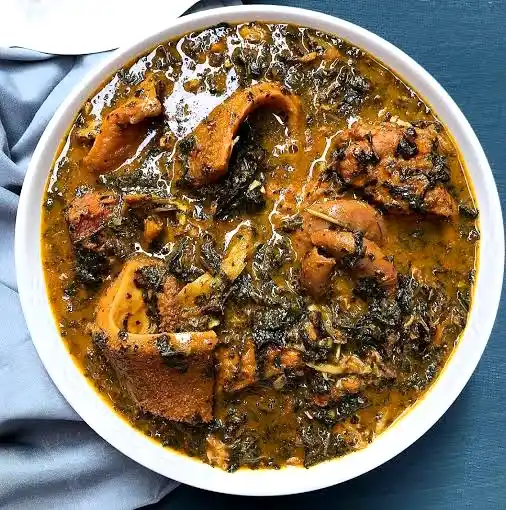
Oha soup is one of the more prized dishes in Igbo cuisine — a rich, cocoyam-thickened soup built around oha leaves, a specific vegetable prepared in a way that’s a little different from any other Nigerian soup on this site. If you grew up with this at home in the Southeast, or you’re discovering it for the first time, here’s what it is and how to make it.
What Is Oha Soup?
Oha soup is a Nigerian soup from Igbo cuisine, made with oha leaves (Pterocarpus mildbraedii), cocoyam as a thickener, and typically cooked with meat, fish, stockfish, and a small amount of palm oil. It’s closely related to bitter leaf soup in preparation and often served on similar occasions, though the two use different primary leaves and have distinct flavor profiles — oha leaves have a milder, more delicate taste compared to bitter leaf’s pronounced bitterness.
One thing that sets oha soup apart from many other Nigerian soups is a specific technique: oha leaves are traditionally torn by hand rather than sliced with a knife, which is believed to preserve their flavor and prevent the leaf from turning an unappealing color in the finished soup.
How to cook rich oha / ora soup with fresh oha & Uziza leaf
What Is Oha Soup Made Of?
Serves 4–6
- 2 cups oha leaves, hand-torn
- 2–3 cocoyam corms (or cocoyam flour/achi as a thickening substitute)
- 1/4 cup palm oil
- 1 lb assorted meat (beef, goat meat, or tripe), cut into chunks
- 1/2 lb stockfish or dried fish
- 2 tbsp ground crayfish
- 1 onion, chopped
- 2–3 scotch bonnet peppers, to taste
- Ogiri or locust beans (iru), optional, for traditional depth
- 2 seasoning cubes
- Salt to taste
How to Make Oha Soup
- Season and boil the meat. Place your assorted meat in a pot with chopped onion, a seasoning cube, and salt. Cover with water and boil until tender, reserving the stock.
- Prepare the cocoyam thickener. Boil the cocoyam corms separately until soft, then pound or blend into a smooth paste. This paste is what gives oha soup its distinctive thick, slightly stretchy body — a similar role to the palm fruit extract in banga soup or the ground seeds in egusi, but with a noticeably different texture and a milder, starchier character of its own.
- Heat the palm oil. In a separate pot, heat the palm oil over medium heat.
- Add the cocoyam paste to the stock. Stir small lumps or spoonfuls of the cocoyam paste into the meat stock, allowing it to dissolve and thicken the soup gradually.
- Add the meat, fish, and seasonings. Stir in the cooked meat, stockfish, crayfish, blended pepper, ogiri or locust beans if using, and the second seasoning cube. Simmer for 10–15 minutes.
- Add the oha leaves last. Tear the oha leaves by hand directly into the pot during the final minute or two of cooking — they wilt very quickly and only need brief cooking to preserve their color and delicate flavor.
- Serve hot, with pounded yam or fufu.
What Does Oha Soup Taste Like?
Oha soup has a mild, slightly earthy flavor from the oha leaves, noticeably gentler than the pronounced bitterness of bitter leaf soup, layered with richness from the palm oil and depth from the stockfish and crayfish. The cocoyam thickener gives it a smooth, slightly stretchy body distinct from soups thickened with ground seeds like egusi or ogbono — some describe the overall effect as more delicate and refined compared to heavier, spicier soups, which is part of why it’s often reserved for special occasions rather than treated as a casual, everyday dish.
Oha Soup vs. Bitter Leaf Soup: What’s the Difference?
These two are often compared since both come from Igbo cuisine and share a similar overall preparation style:
- Bitter leaf requires extensive washing to reduce its natural bitterness before cooking, and retains a distinctly bitter character even after preparation.
- Oha leaves are much milder, require no washing to reduce bitterness, and are simply hand-torn and added near the end of cooking.
Many households make both regularly, treating them as related but distinct dishes for different occasions or moods rather than interchangeable versions of the same soup.
Making Oha Soup in the Diaspora vs. Back Home
- Oha leaves are one of the harder ingredients to find consistently outside Nigeria, more specialized than bitter leaf or ugu. Well-supplied African grocery stores in larger cities across the US, UK, and Canada may carry frozen oha leaves, but availability varies significantly by location.
- Achi or cocoyam flour can substitute for fresh cocoyam when fresh corms aren’t available, offering a similar thickening effect with less prep work — a practical adjustment many households make even in Nigeria, not just abroad.
- If oha leaves genuinely aren’t available, some diaspora cooks substitute a smaller amount of spinach for color and volume, understanding the flavor won’t be identical — better treated as a last resort than a true substitute.
- This is a good dish to plan ahead for rather than cook on impulse, given the specialty ingredients involved — worth checking with your local African grocer or an online retailer in advance if you know you want to make it for a specific occasion.
Finding Oha Soup Ingredients in the USA, UK, and Canada
Frozen oha leaves and cocoyam (or achi/cocoyam flour) are stocked at well-supplied African grocery stores in major cities with a Nigerian community, and worth checking with online African grocery retailers if your local store doesn’t carry them, since availability is less consistent than with more common ingredients like bitter leaf or ugu. (See our directory of African grocery stores by city to find one near you.)
Where Does Oha Soup Come From?
Oha soup originates from Igbo cuisine in southeastern Nigeria, and it’s considered one of the more prestigious, celebratory soups within Igbo food culture — often associated with special occasions and gatherings rather than being purely an everyday dish, partly due to the relative cost and specialty of good oha leaves and cocoyam compared to more common vegetables. The soup’s association with formal or festive occasions has helped preserve its traditional preparation methods, including the hand-tearing technique for the leaves, even as many other dishes have adapted more freely to convenience shortcuts.
Nutritional Overview
Oha leaves contribute a meaningful amount of vitamins and minerals typical of leafy greens, while the cocoyam thickener adds a source of complex carbohydrates and some fiber, distinct from the ground-seed thickeners used in soups like egusi or ogbono. The overall dish sits somewhere between a lighter vegetable soup and a heartier, starch-thickened one, offering a reasonably balanced nutritional profile when paired with its traditional swallow.