 US,
US,  UK
UK  Canada
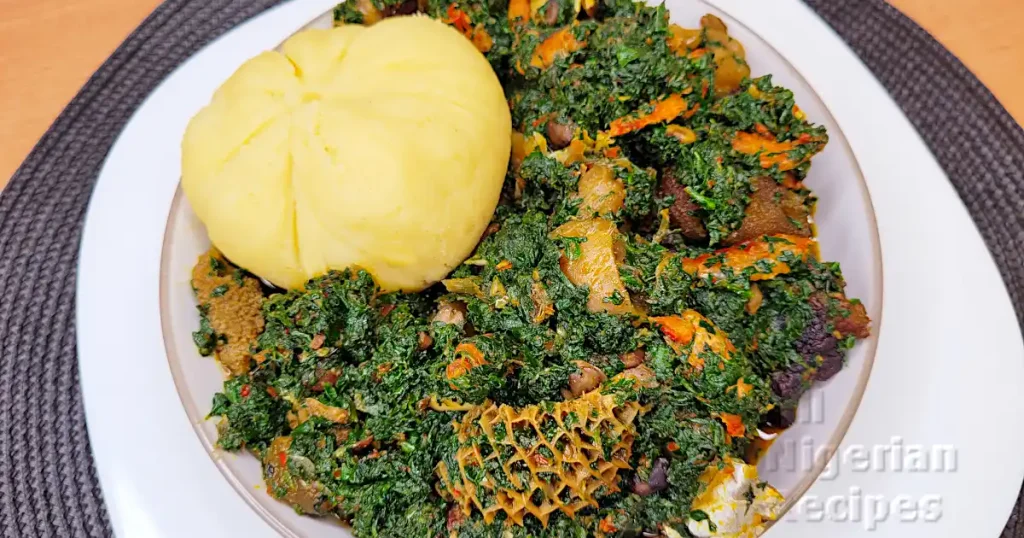
Efo riro is one of the most-loved Yoruba dishes — a rich, vegetable-forward stew that’s as comfortable on a weeknight table as it is at a big family gathering. If you grew up eating this and now want to recreate it wherever you’re living, or you’re simply curious what it is, this guide covers what efo riro actually is, how to make it, and where to find the ingredients.
What Is Efo Riro?
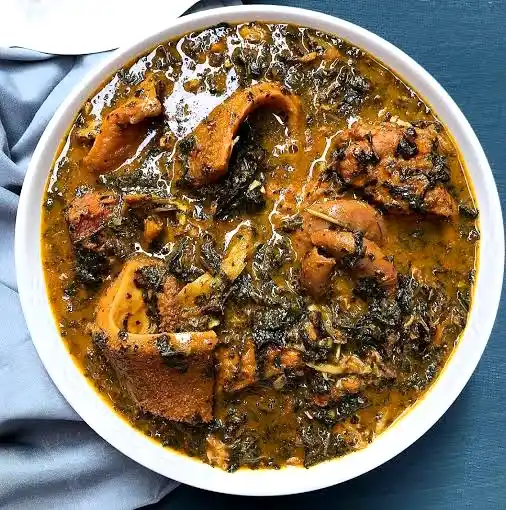
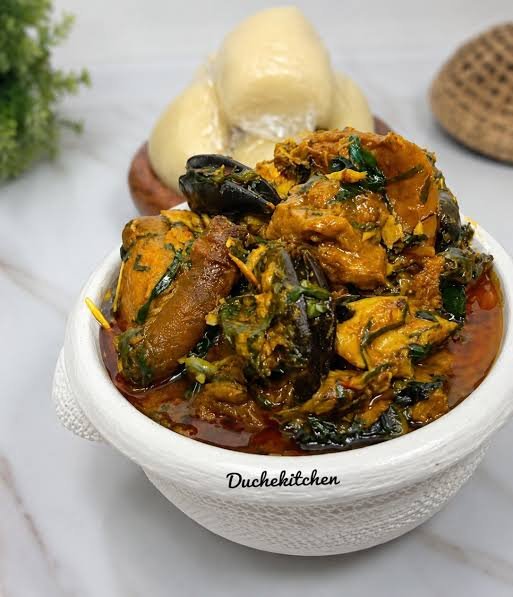
Efo riro is a Yoruba Nigerian stew made primarily from leafy greens — traditionally ugu (fluted pumpkin leaves) or spinach — cooked in a rich base of palm oil, blended peppers, onions, and assorted proteins like meat, fish, and stockfish. The name itself comes from Yoruba: “efo” means vegetable/leafy greens, and “riro” refers to the stirring or frying process used to make it.
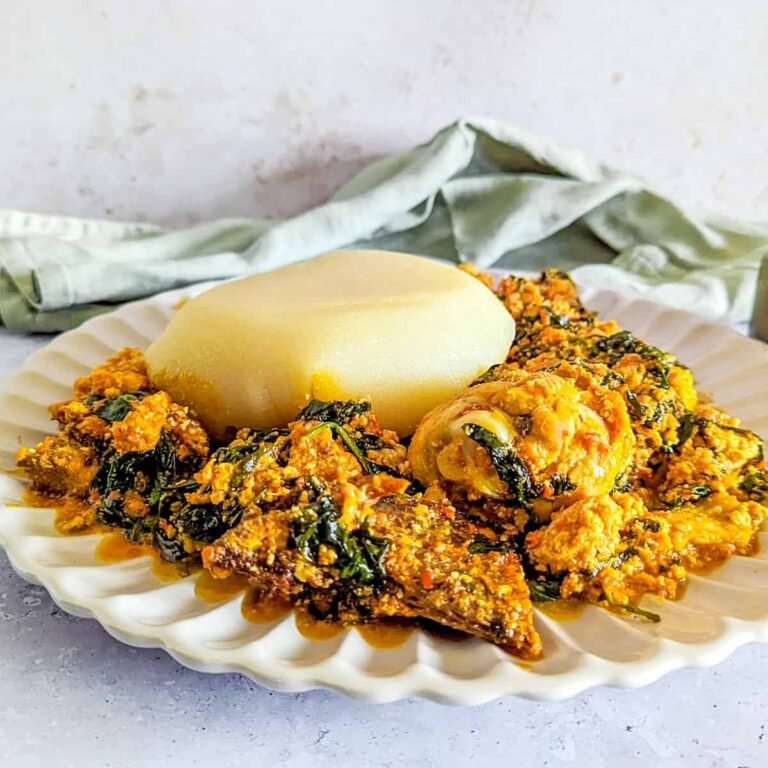
Unlike a soup meant to be eaten with a swallow, efo riro sits somewhere between a soup and a stew — it’s often eaten with rice as well as with fufu or pounded yam, making it one of the more versatile dishes in Nigerian cooking.
What Is Efo Riro Made Of?
Serves 4–6
- 4 cups chopped ugu (fluted pumpkin leaves) or spinach
- 1/2 cup palm oil
- 1 lb assorted meat (beef, goat meat, or tripe), cut into chunks
- 1/2 lb stockfish or dried fish (optional, but traditional)
- 1/2 lb fresh fish (smoked or fresh catfish works well), optional
- 1 large onion, chopped
- 3–4 scotch bonnet peppers (or to taste), blended
- 2–3 fresh tomatoes or 1 small can of plum tomatoes, blended
- 2 tbsp ground crayfish
- 2 seasoning cubes (Maggi or Knorr)
- Salt to taste
- Locust beans (iru), optional, for an extra layer of traditional flavor
How to Make Efo Riro (Easy Method)
- Season and boil the meat. Place your assorted meat in a pot with chopped onion, a seasoning cube, and salt. Cover with water and boil until tender, about 30–40 minutes. Reserve a little of the stock.
- Blend the pepper base. Blend the scotch bonnet peppers, tomatoes, and half the onion together into a smooth or slightly chunky base, depending on your preference.
- Heat the palm oil. In a separate pot, heat the palm oil over medium heat until it becomes clear.
- Fry the pepper base. Add the blended pepper mixture to the hot oil and fry, stirring occasionally, for about 10–15 minutes until the raw tomato smell is gone and the oil begins to separate slightly at the edges — this step builds the depth of flavor, so don’t rush it.
- Add the protein. Stir in the cooked meat, stockfish, and fish. Add the ground crayfish, locust beans (if using), and the second seasoning cube. Simmer for 10 minutes.
- Add the greens. Stir in the chopped ugu or spinach and cook for just 3–5 minutes — efo riro is best when the greens are still vibrant and slightly firm, not overcooked into mush.
- Adjust seasoning and serve hot, with rice, fufu, or pounded yam.
Tips for an Easy, Reliable Efo Riro
- Don’t overcook the greens. This is the single biggest difference between an average pot and a great one — pull it off the heat as soon as the greens wilt down, usually just a few minutes.
- Fry the pepper base properly. Rushing this step leaves a raw, sharp tomato taste in the final stew. Give it the full 10–15 minutes.
- Spinach is a completely acceptable substitute for ugu if you can’t find it — many households in the diaspora use spinach by default, and it’s considered a normal, authentic variation rather than a compromise.
- Locust beans (iru) are optional but traditional — they add a distinct fermented depth some families consider essential and others skip entirely. Either way is valid.
Finding Efo Riro Ingredients in the USA, UK, and Canada
Ugu leaves can be harder to find fresh outside major cities, but frozen ugu is increasingly available at African grocery stores and online African grocery retailers across all three countries — and fresh spinach, available at any regular supermarket, works as a reliable substitute. Palm oil, crayfish, and locust beans are commonly stocked at African and Caribbean grocery stores. (See our full guides on where to buy ugu in the USA, UK, and Canada.)
Cooking Efo Riro in the Diaspora vs. Back Home
- Spinach isn’t a compromise — it’s the default for most diaspora households. Fresh ugu is harder to find outside major cities in the US, UK, and Canada, and frozen ugu, while increasingly available, isn’t everywhere yet. Making efo riro with spinach is completely normal, not a lesser version of the dish.
- Locust beans (iru) are easy to skip if you can’t find them or don’t like the smell. They add a traditional fermented depth some households consider essential, but plenty of authentic pots are made without them — treat it as optional, not a requirement.
- Palm oil color and strength vary by brand outside Nigeria. For the closest flavor to what you grew up with, look for “red palm oil” specifically rather than a refined or bleached version.
What to Eat Efo Riro With
Efo riro is one of the more flexible Nigerian dishes when it comes to pairing:
- White rice — a common, simple pairing, especially for weeknight meals.
- Fufu — for a more traditional, swallow-based meal.
- Pounded yam — another classic swallow pairing.