 US,
US,  UK
UK  Canada
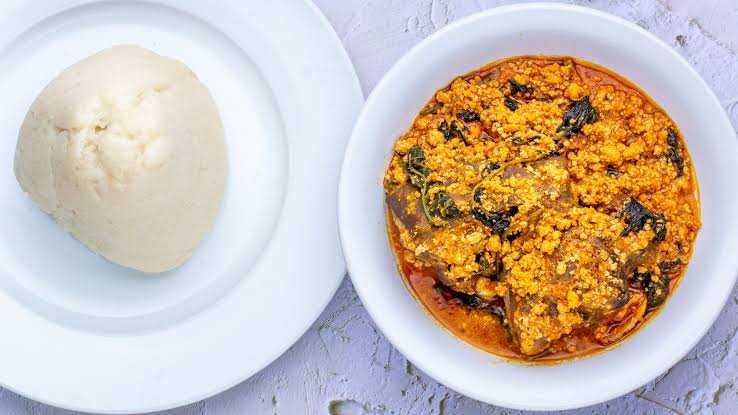
Fufu and egusi is one of the best-known Nigerian food combinations, bringing together a smooth, starchy swallow with a rich soup made primarily from ground melon seeds. For Nigerians living in the United States, United Kingdom and Canada, fufu and egusi can be one of the most familiar ways to recreate the taste of home. Ingredients that once required a trip back to Nigeria are now available through many African grocery stores, Nigerian food shops and online retailers serving diaspora communities. The combination is simple: fufu provides the mild, soft base, while egusi soup provides the rich flavor, vegetables, seasonings and, depending on the recipe, meat or fish.
This guide explains what fufu and egusi is, what it is made from, what it tastes like, how Nigerians eat it, the different swallows that can be served with egusi soup, and how to enjoy the meal while living abroad.
What Is Fufu and Egusi?
Fufu and egusi refers to fufu served with egusi soup. They are two separate foods eaten together. Fufu is a smooth, starchy swallow that may be prepared from cassava, plantain, yam or commercially prepared fufu flour. Egusi soup is a Nigerian soup traditionally made with ground egusi seeds, which are melon seeds used in many West African dishes. The fufu itself has a relatively mild flavor. Egusi soup supplies most of the strong taste in the meal. When served together, a small portion of fufu is usually taken by hand and used to scoop up some of the soup. That simple combination is what people mean when they talk about fufu and egusi. If you want a deeper explanation of fufu itself, see our guide:
What Is Fufu?/ingredients/fufu/
What Is Fufu and Egusi Made Of?
Fufu and egusi is made from two main components: the swallow and the soup. The exact ingredients depend on how each household prepares the meal.
The Fufu
Fufu can be prepared from different starches. Cassava-based fufu is one popular option. Plantain-based fufu and packaged fufu flour are also widely used, particularly by Nigerians living abroad. Some people also use the word fufu more broadly when talking about Nigerian swallows, although foods such as pounded yam and eba are technically different preparations.
The Egusi Soup
Egusi soup gets its name from egusi seeds, which are ground before cooking. A Nigerian egusi soup may also include ingredients such as palm oil, vegetables, peppers, onions, seasoning and different kinds of meat or fish. Recipes vary considerably by family and region.
Egusi Soup Recipe/recipes/egusi-soup/
That keeps the two pages from competing against each other in Google.
What Does Fufu and Egusi Taste Like?
The taste comes mainly from the egusi soup.
Fufu itself generally has a mild, slightly starchy flavor. Egusi soup, by comparison, is usually richer and more strongly seasoned. The ground melon seeds give the soup its distinctive body and character, while the vegetables, peppers, seasonings, meats or fish used in the recipe add further flavor.
When eaten together, the neutral quality of the fufu helps balance the stronger soup. For someone trying Nigerian food for the first time in the USA, UK or Canada, the texture may initially feel more unfamiliar than the flavor. The fufu is soft and smooth, while egusi soup can have a thicker, more textured consistency.
How Do You Eat Fufu and Egusi?
Fufu and egusi is traditionally eaten with the hand.
A small portion of fufu is taken from the main serving and gently shaped with the fingers.
The fufu is then used to scoop up some egusi soup before both are eaten together.
You do not need to make the fufu into a perfectly shaped ball.
The main purpose is to combine a manageable amount of fufu with the soup. For Nigerians introducing children, spouses, friends or colleagues abroad to Nigerian food, fufu and egusi can also be a good introduction to the traditional relationship between Nigerian swallows and soups.
Is Fufu and Egusi Nigerian?
Fufu-style foods exist across several parts of West and Central Africa, and melon-seed soups also appear in different regional cuisines.
However, fufu served with Nigerian egusi soup is strongly associated with Nigerian cuisine. Nigeria has many different swallow-and-soup combinations, and preferences often vary according to region, ethnic background and family tradition.
A person may prefer fufu with egusi, while another family may prefer pounded yam, eba, semovita or another swallow with the same soup. That variety is part of Nigerian food culture.
What Type of Fufu Goes With Egusi Soup?
Several swallows work well with egusi soup. Cassava fufu is one obvious choice and is commonly associated with the phrase “fufu and egusi.” However, egusi soup can also be eaten with pounded yam, eba, semovita, amala and other Nigerian swallows.
That means you do not have to abandon the meal simply because a particular type of fufu flour is unavailable where you live. For diaspora families in the USA, UK and Canada, availability sometimes determines the swallow served with the soup. If your local African grocery shop has pounded yam flour but not the particular fufu you prefer, you can still enjoy egusi soup with another suitable swallow.
Fufu and Egusi vs Pounded Yam and Egusi
People sometimes use these phrases interchangeably online, but they are not exactly the same meal.
Fufu and egusi uses fufu as the swallow.
Pounded yam and egusi uses pounded yam.
The egusi soup may be the same, but the swallow is different.
Pounded yam is traditionally prepared from yam, while fufu may be made from cassava or other starchy ingredients.
The two can therefore have different textures and tastes.
We should not create another article simply called “pounded yam and egusi” right now. That search can initially be addressed as a section within relevant pounded-yam and egusi content unless future Search Console data shows a strong separate intent.
What About Eba and Egusi?
Eba and egusi is another very popular Nigerian combination.
Eba is made from garri, which is processed from cassava.
Although eba and cassava fufu both ultimately involve cassava, they are different foods with distinct preparation methods, textures and flavors.
This means: fufu and egusi, eba and egusi, and pounded yam and egusi all describe the soup being eaten with different swallows. For Nigerians abroad, this flexibility is useful because you can choose whichever swallow is easiest to find locally.
Is Fufu and Egusi Healthy?
There is no simple yes-or-no answer because the nutritional value depends on the recipe, ingredients and portion size.
Fufu is largely a source of carbohydrate, although the precise nutritional composition depends on whether it is made from cassava, plantain, yam or another ingredient.
Egusi seeds contain fat and protein, while the vegetables, meats, fish and other ingredients used in the soup also affect the nutritional profile of the meal.
Portion size matters as well.
Instead of treating the whole meal as automatically healthy or unhealthy, it is more useful to consider: the amount of fufu being eaten, the quantity of oil used in the soup, the vegetables included, the protein source and the rest of the person’s overall diet. Anyone following a diet for a medical condition should rely on individualized advice from an appropriate healthcare professional.
Can You Make Fufu and Egusi at Home Abroad?
Yes.
Nigerians living in the USA, UK and Canada can prepare both parts of the meal at home.
Packaged fufu flour can make the swallow relatively simple to prepare.
Ground egusi or whole egusi seeds are also sold by many African and Nigerian grocery retailers.
You do not necessarily need to live near a very large Nigerian community either. Many African food businesses now sell online and deliver to customers outside the biggest diaspora cities.
Our separate Fufu Recipe explains how to prepare the swallow:
/recipes/fufu-recipe/
Our upcoming Egusi Soup Recipe will explain how to prepare the soup:
/recipes/egusi-soup/
Finding Fufu and Egusi Ingredients in the USA
In the United States, Nigerian and African grocery stores can be found in many major metropolitan areas with African diaspora communities.
Packaged fufu flour, egusi seeds, ground egusi, palm oil and other Nigerian ingredients may be available in physical stores or from online African food retailers.
NigerianFoodSuppliers.com is building city-based grocery directories so readers can find stores serving locations such as Houston, Dallas, Atlanta, Chicago, New York and Washington, DC.
For direct purchase intent, we will use separate guides rather than trying to make this article rank for every “where to buy” search.
Finding Fufu and Egusi Ingredients in the UK
The United Kingdom has a well-established African grocery market, particularly in cities with large Nigerian communities.
Nigerian shoppers may find fufu flour, egusi, palm oil and other traditional ingredients through African supermarkets, independent grocery shops and online Nigerian food retailers.
Our directory content will help readers find suitable shops in areas including London, Manchester, Birmingham, Leicester and Liverpool.
Buying information belongs in the UK commercial section of the website rather than being duplicated inside every recipe and food guide.
Finding Fufu and Egusi Ingredients in Canada
Nigerians living in Canada can also find many of the ingredients required for fufu and egusi.
African grocery stores operate in major diaspora centres such as Toronto, Brampton, Mississauga, Calgary, Edmonton, Ottawa, Winnipeg and Vancouver.
Online African grocery businesses can also be useful for people who live farther from major urban centres.
Our Canadian directories will eventually connect these readers with verified grocery stores and online purchasing options.
How to Make Fufu and Egusi at Home
You need to prepare the two components separately.
First, prepare the egusi soup according to your preferred Nigerian recipe.
Then prepare the fufu or other swallow shortly before serving so it remains warm and has a good texture.
Serve a portion of fufu alongside the egusi soup rather than mixing everything together in the pot.
For the detailed cooking process, use the two dedicated recipes:
How to Make Fufu/recipes/fufu-recipe/
How to Cook Egusi Soup/recipes/egusi-soup/
This is important for our SEO structure because someone searching “fufu and egusi” may simply want to understand the meal, while someone searching “egusi soup recipe” wants cooking instructions.
Why Fufu and Egusi Matters to Nigerians Living Abroad
For many Nigerians abroad, familiar food is one of the easiest ways to maintain a connection with home.
A bowl of egusi soup with fufu can bring back memories of family meals, celebrations and everyday Nigerian life.
It can also help parents introduce children born in the USA, UK or Canada to Nigerian ingredients and eating traditions.
That connection is central to what NigerianFoodSuppliers.com is building.
The goal is not only to explain Nigerian food. It is to help Nigerians living abroad find the ingredients, grocery stores, suppliers, substitutes and practical information they need to continue enjoying authentic Nigerian meals wherever they live.