 US,
US,  UK
UK  Canada
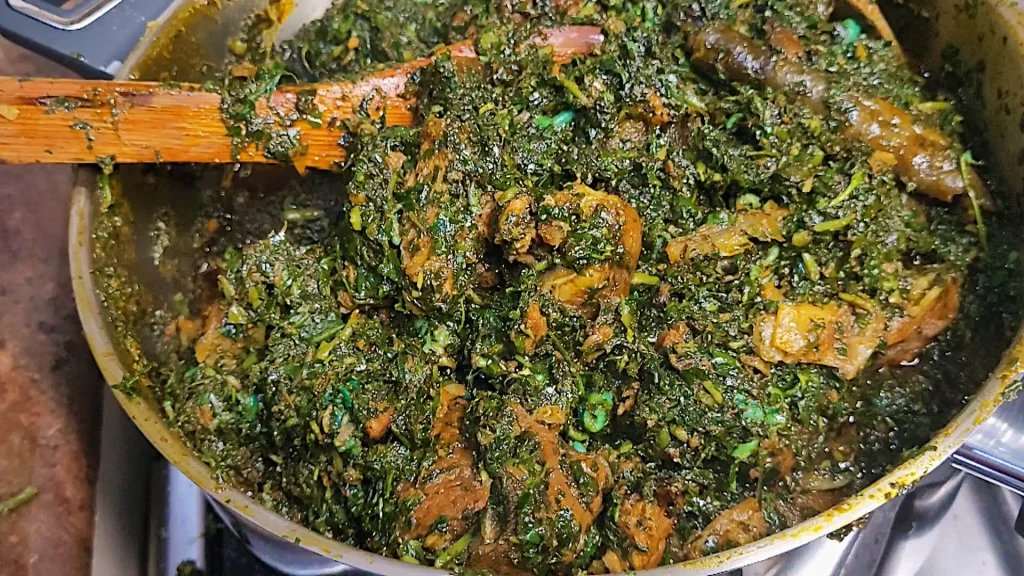
Afang soup is one of Nigeria’s richest, most textured soups — a vegetable-forward dish from the Efik and Ibibio people of Cross River and Akwa Ibom states, built on two distinct leaves that give it a flavor unlike anything else in Nigerian cuisine. If you grew up with this in a Calabar or Uyo household, or you’re curious what makes it so distinct, here’s the full picture.
What Is Afang Soup?
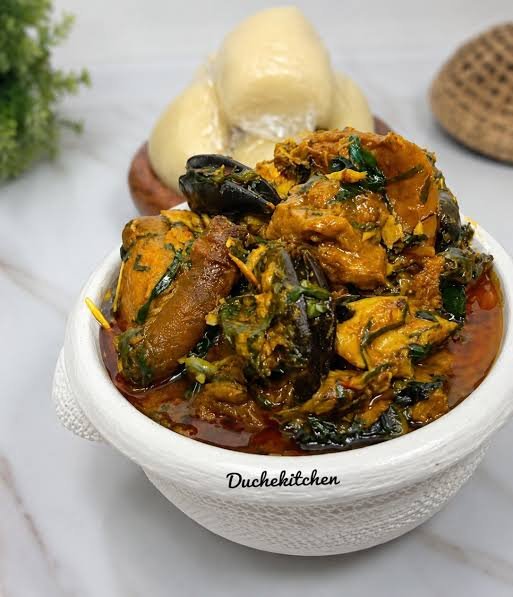
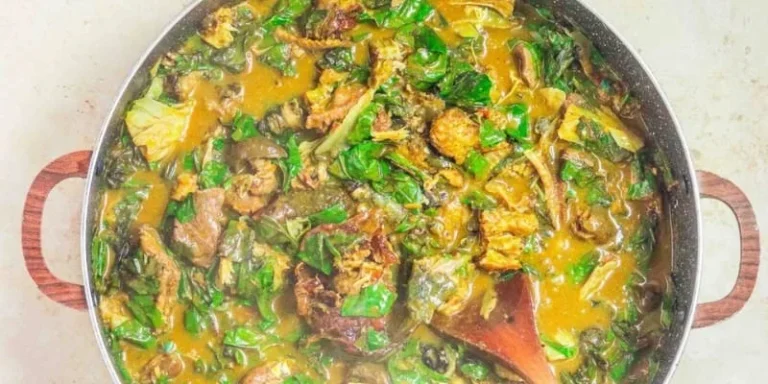
Afang soup is a Nigerian soup made primarily from finely sliced afang leaves (wild okazi/gnetum leaves) and waterleaf, cooked with palm oil, assorted meat, fish, and stockfish into a rich, hearty dish. It originates from the Efik and Ibibio ethnic groups of southern Nigeria’s Cross River and Akwa Ibom states, and is considered one of the signature soups of the region, alongside dishes like edikaikong.
The defining feature of afang soup is its combination of two different leaves — afang (also called okazi in some regions) and waterleaf — sliced thin and cooked together, giving the soup a distinct, slightly chewy texture that sets it apart from smoother soups like efo riro or egusi.
What Is Afang?
“Afang” refers to the leaves of the Gnetum africanum plant, also commonly called okazi leaf, wild spinach, or eru in different regions and neighboring countries. It’s a tough, slightly fibrous leaf that requires fine slicing (traditionally by hand or with a specialized shredding tool) before cooking, since it doesn’t soften the way more tender leafy greens do. This distinct preparation and texture is central to what makes afang soup recognizable and different from other Nigerian vegetable soups.
How to cook Afang soup like a pro ! Calabar style Afang soup. I guarantee perfect result every time
What Is Afang Soup Made Of?
Serves 4–6
- 2 cups afang (okazi) leaves, finely sliced or shredded
- 2 cups waterleaf, chopped
- 1/2 cup palm oil
- 1 lb assorted meat (beef, goat meat, or tripe), cut into chunks
- 1/2 lb stockfish or dried fish
- 1/2 lb periwinkle or fresh fish, optional but traditional
- 1 medium onion, chopped
- 2–3 scotch bonnet peppers, blended or chopped
- 2 tbsp ground crayfish
- 2 seasoning cubes
- Salt to taste
Periwinkle (a small shellfish) is a traditional addition in the Efik and Ibibio preparation of afang soup, adding a distinct briny flavor, though it’s easily left out if unavailable.
How to Make Afang Soup
- Season and boil the meat. Place your assorted meat in a pot with chopped onion, a seasoning cube, and salt. Cover with water and boil until tender, reserving the stock.
- Prepare the leaves. Finely slice the afang leaves — this is a genuinely important step, since the leaf’s toughness means thicker slices stay noticeably chewy. Chop the waterleaf separately.
- Heat the palm oil. In a separate pot, heat the palm oil over medium heat.
- Cook the waterleaf first. Add the chopped waterleaf to the pot and let it cook down, releasing its natural liquid — this liquid becomes part of the soup’s base, so there’s no need to add much extra water.
- Add the meat, fish, and stockfish. Stir in the cooked meat, stockfish, and periwinkle if using. Add the blended pepper, ground crayfish, and second seasoning cube.
- Simmer. Let the mixture cook for 10–15 minutes, allowing the flavors to combine.
- Add the afang leaves last. Stir in the finely sliced afang leaves during the final few minutes of cooking — they need less time than the waterleaf and are best added toward the end to preserve some texture.
- Adjust seasoning and serve hot, with pounded yam, fufu, or garri.
What Does Afang Soup Taste Like?
Afang soup has a rich, savory flavor from the palm oil and stock, with a distinct earthy, slightly bitter note from the afang leaves themselves — a flavor genuinely different from the more neutral greens used in soups like efo riro. The texture is one of its most notable features: the finely sliced afang leaves retain a slight chewiness even after cooking, giving the soup a heartier, more substantial feel than smoother vegetable soups. First-time tasters often describe it as one of the more complex-tasting Nigerian soups, with layers of bitterness, brininess from the periwinkle, and richness from the palm oil all present at once rather than one dominant flavor carrying the dish.
Afang Soup vs. Edikaikong: What’s the Difference?
These two soups are often mentioned together since both come from the same southeastern Nigerian culinary tradition and both use a two-leaf combination. Edikaikong uses ugu (pumpkin leaves) alongside waterleaf, giving it a milder, more familiar flavor to those used to efo riro. Afang soup uses the tougher, more distinctive afang (okazi) leaf instead, giving it a heartier texture and a more pronounced, slightly bitter flavor that’s genuinely its own.
Making Afang Soup in the Diaspora vs. Back Home
- Afang leaves are one of the harder ingredients on this site to source consistently, since they’re more specialized than staples like ugu or spinach. Well-supplied African grocery stores in larger cities across the US, UK, and Canada do carry them, often frozen or pre-shredded, but availability varies more than with other soups covered here.
- Pre-shredded, frozen afang leaves solve the hardest prep step. Slicing fresh afang leaves thin enough by hand is genuinely labor-intensive; pre-shredded frozen versions, when available, save real time without meaningfully compromising the result.
- Periwinkle is the easiest ingredient to skip. It’s traditional but not essential — the soup remains authentic and flavorful without it if it’s not available or affordable where you are.
- Waterleaf substitutes exist if needed. Spinach can work as a rough substitute for waterleaf in a pinch, though the flavor and texture won’t be identical — worth trying if waterleaf specifically isn’t stocked near you.
Finding Afang Soup Ingredients in the USA, UK, and Canada
Afang (okazi) leaves and waterleaf are stocked at well-supplied African grocery stores in major cities with a Nigerian community, often in the frozen section, and increasingly available through online African grocery retailers shipping nationwide across all three countries. (See our full guides on where to buy afang leaf in the USA, UK, and Canada.)
Where Does Afang Soup Come From?
Afang soup originates from the Efik and Ibibio peoples of Cross River and Akwa Ibom states in southeastern Nigeria, a region known for a distinct culinary tradition centered on Calabar, one of Nigeria’s most food-celebrated cities. Afang soup is considered a signature dish of this region, often served at major celebrations and gatherings, and is closely tied to the area’s identity the way jollof rice or efo riro is tied to broader Nigerian and Yoruba food culture respectively. The soup has since spread well beyond its region of origin and is now eaten and appreciated across Nigeria and among the diaspora.
Nutritional Overview
Afang soup is a genuinely nutrient-dense dish thanks to its heavy reliance on leafy greens — both afang leaf and waterleaf contribute meaningful fiber, vitamins, and minerals, making this one of the more vegetable-forward soups in Nigerian cuisine despite its rich, palm-oil base. The combination of protein from meat, fish, and stockfish alongside the leafy greens gives it a well-rounded nutritional profile relative to soups built more heavily around a single starchy or fatty base.