 US,
US,  UK
UK  Canada
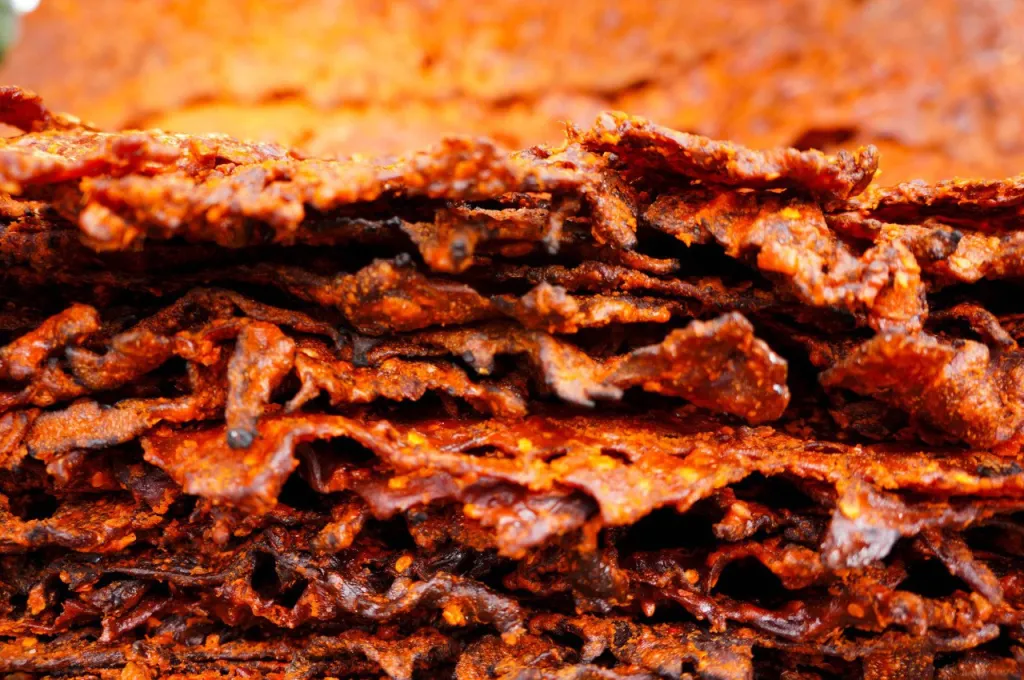
Kilishi is Nigeria’s answer to beef jerky, though calling it that undersells just how different the flavor actually is. Thin sheets of meat are coated in a spiced peanut paste and dried, producing something closer to a spiced, savory meat cracker than anything resembling Western style jerky.
What Kilishi Actually Is
Kilishi originates from northern Nigeria, closely tied to Hausa food culture, the same region suya comes from, and the two share some genuine flavor DNA. Thin slices of beef are coated in a paste made from ground peanuts, spices, and pepper, then dried, traditionally in the sun, until firm and shelf stable. The result is intensely flavorful, spicy, nutty, and savory all at once, and unlike suya, which is grilled fresh and eaten immediately, kilishi is meant to keep, making it a genuine travel and snacking food rather than something eaten hot off the grill.
How KILISHI (Nigerian Beef Jerky) is made from start to finish | step-by-step process
Kilishi vs Suya: What’s the Difference
These two get grouped together constantly since they share a spice profile and a regional origin, but they’re prepared completely differently. Suya is fresh grilled meat on skewers, coated in yaji spice and eaten hot, usually the same day it’s made. Kilishi is dried rather than grilled, meant to last for weeks without refrigeration, and eaten as a snack rather than a meal. Think of the difference roughly the way you’d think about the difference between a fresh grilled steak and beef jerky, related in spirit, completely different in texture, shelf life, and how they’re actually eaten.
Why Kilishi Shows Up So Much in UK Searches
This is worth addressing directly, since the pattern in the data is genuinely unusual. Kilishi searches are overwhelmingly concentrated in the UK, far more than in the US or Canada, which likely reflects a combination of strong existing import and specialty retail channels for the product in the UK specifically, alongside real demand from Nigerian and West African communities there. If you’re shopping in the US or Canada, kilishi is harder to find consistently, and online ordering may be the more realistic route rather than expecting to find it at a typical African grocery store.
Buying Kilishi in the UK, USA, and Canada
In the UK, kilishi is available through specialty African food retailers and increasingly online, reflecting the stronger demand shown in the data. In the US and Canada, availability is more limited and inconsistent, and ordering online from a specialty retailer is often more realistic than expecting to find it on a regular African grocery store shelf. Since it’s shelf stable by nature, it ships reasonably well compared to fresh or frozen African food products, which makes online ordering a genuinely practical option regardless of country.
A Street Food and Travel Snack Both
Within Nigeria, kilishi is closely associated with travel, a common thing to pick up at bus stations or from roadside vendors along northern routes, precisely because it doesn’t spoil the way fresh food would on a long journey. It’s also a fixture of celebrations and gatherings in northern Nigeria specifically, similar to how suya functions socially further south, though kilishi’s shelf stability means it travels and gets gifted in a way fresh grilled suya never really could. That practical durability is really what separates its cultural role from suya’s, even though the two are constantly mentioned in the same breath.
Quick Questions
Is kilishi the same as suya? No, though they share spices and a regional origin. Suya is fresh grilled meat eaten immediately. Kilishi is dried meat, shelf stable, and eaten as a snack rather than a hot meal.
Is kilishi easy to find outside Nigeria? It’s most consistently available in the UK, where demand and specialty retail options are strongest. In the US and Canada, it’s harder to find in physical stores, and ordering online is often the more reliable option.
How long does kilishi last? Being dried and shelf stable, it keeps considerably longer than fresh meat, generally weeks when stored properly, which is part of what makes it a practical snack and travel food.
Is kilishi spicy? Yes, generally, reflecting the same pepper forward spice tradition as suya, though the exact heat level varies depending on who makes it.