 US,
US,  UK
UK  Canada
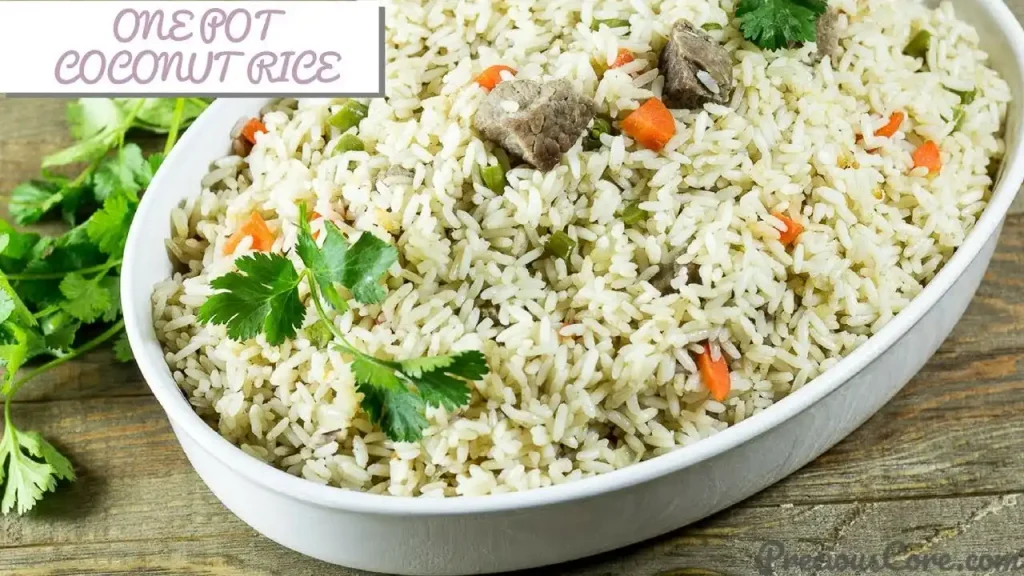
Nigerian coconut rice takes the basic technique behind jollof rice, cooking rice directly in a flavorful liquid rather than boiling it plain, and swaps in coconut milk for a rich, lightly sweet result that’s become a genuine favorite in its own right rather than just a variation on the more famous dish.
What Makes Coconut Rice Different
Where jollof rice builds its flavor from a tomato and pepper base, coconut rice leans on coconut milk as the primary liquid, giving the finished dish a subtle sweetness and richness that’s genuinely different from jollof’s more savory, tomato forward profile. It’s still seasoned with pepper, onion, and spices, so it’s not a purely sweet dish, but the coconut milk fundamentally changes the character compared to any tomato based rice.
How to make Nigerian Coconut Rice for beginners | step by step | very Easy
Nigerian Coconut Rice Ingredients
Serves 4 to 6
- 2 cups long-grain rice
- 2 cans (13.5 oz each) coconut milk
- 1 cup chicken or vegetable stock
- 1 onion, chopped
- 1 red bell pepper, diced
- 1 to 2 scotch bonnet peppers, to taste
- 2 tbsp vegetable oil
- 1 tsp curry powder
- 1 tsp dried thyme
- 1 seasoning cube
- Salt to taste
- Mixed vegetables (carrots, green beans, sweetcorn), optional
How to Make Nigerian Coconut Rice
- Rinse the rice thoroughly until the water runs mostly clear, which helps prevent the finished dish from turning overly sticky.
- Heat the oil in a pot and sauté the onion until fragrant.
- Add the diced bell pepper and scotch bonnet, cooking for a couple of minutes.
- Stir in the curry powder and thyme, letting the spices toast briefly in the oil before adding any liquid, which brings out more of their flavor.
- Pour in the coconut milk and stock, then add the seasoning cube and salt. Bring to a boil.
- Add the rinsed rice, stir once to combine, then reduce heat to low, cover, and simmer until the rice is tender and has absorbed most of the liquid, generally 20 to 25 minutes. Avoid stirring too often once it’s simmering, since this can make the rice gummy.
- If using mixed vegetables, stir them in during the final 5 to 10 minutes of cooking so they stay slightly firm rather than turning mushy.
- Let the rice rest, covered, for a few minutes off the heat before fluffing with a fork and serving.
Getting the Flavor Balance Right
The biggest risk with coconut rice is letting it lean too sweet, especially if you’re using a naturally sweeter brand of coconut milk. Balancing that sweetness with real seasoning, curry powder, thyme, pepper, and salt, is what keeps the dish tasting like a proper savory rice rather than a dessert adjacent side. Taste and adjust the seasoning before adding the rice, since it’s much easier to correct the liquid’s flavor at that stage than after the rice has already absorbed it.
What to Serve Coconut Rice With
Coconut rice pairs well with grilled or fried chicken, fish, or shrimp, and its slightly sweet, rich character works particularly well alongside something with real char or spice to contrast it, similar to how suya or grilled fish balances the dish’s richness. It’s less commonly paired with a heavy stew the way jollof rice often is, since two rich, saucy elements together can feel like too much.
Making This Outside Nigeria
This is a genuinely easy dish to make anywhere, since canned coconut milk is a completely standard item at regular supermarkets across the US, UK, and Canada, not a specialty African ingredient at all. Every other ingredient, rice, bell pepper, curry powder, thyme, is equally easy to find. The only slightly specialty item is scotch bonnet pepper, and even that’s increasingly available at regular supermarkets in international produce sections, not just African grocery stores.
Where Coconut Rice Fits in Nigerian Cooking
Coconut rice is more closely associated with coastal Nigerian regions, where coconut itself grows and has a longer culinary history, than with the inland areas more strongly tied to jollof rice’s tomato and pepper tradition. It’s also popular across other West African cuisines, and the broader technique of cooking rice in coconut milk shows up well beyond Nigeria’s borders, making this one of the dishes on this site with the clearest cross-cultural West African footprint rather than being distinctly and singularly Nigerian the way something like ofada stew is.
Quick Questions
What’s the difference between coconut rice and jollof rice? Jollof rice is cooked in a tomato and pepper base. Coconut rice is cooked in coconut milk, giving it a richer, slightly sweet flavor that’s genuinely different from jollof’s more savory profile.
Can I make coconut rice less sweet? Yes, leaning more heavily on savory seasoning, curry powder, thyme, extra pepper, and salt, helps balance out the coconut milk’s natural sweetness.
Can I use fresh coconut milk instead of canned? Yes, fresh coconut milk works well if you have access to it, though canned is the more practical and consistent option for most people cooking outside Nigeria.
What protein goes best with coconut rice? Grilled or fried chicken, fish, and shrimp are all common pairings, especially options with some char or spice to balance the rice’s richness.