 US,
US,  UK
UK  Canada
Agbalumo
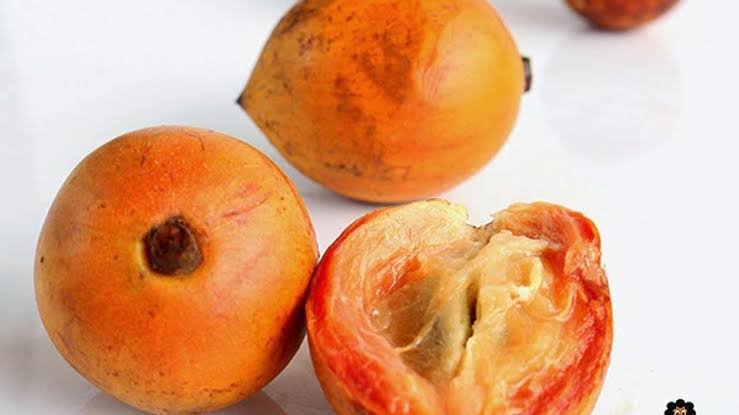
If you’ve ever seen it called “African star apple” and wondered if that’s the same fruit you grew up eating by the roadside, it is.
What Is It
Agbalumo is a fruit — orange to yellow skin, with a soft, slightly sticky, tart-sweet pulp inside surrounding a few large seeds. In English, it’s called African star apple, named for the star-shaped pattern you see when you cut it in half. Same fruit, different name depending on where you learned it.
What It Tastes Like
Tart and slightly sweet, with a chewy, sticky texture that takes some getting used to if you didn’t grow up eating it. It’s not a fruit you bite into like an apple — you work the pulp off the seeds with your teeth, spitting out the seed and skin as you go. Genuinely more of an experience than a quick snack.
When It’s in Season
Agbalumo is a seasonal fruit in Nigeria, typically associated with the dry season, roughly November through March. Outside that window, even in Nigeria, it’s genuinely hard to find fresh — this isn’t a year-round fruit.
Can You Get It Outside Nigeria?
This is the honest answer: rarely, and only fresh. Agbalumo doesn’t travel or store well, so you’re not going to find it frozen, canned, or otherwise preserved the way you would ugu or bitter leaf. A small number of African grocery stores in cities with a large Nigerian population occasionally get limited shipments during peak season, but it’s inconsistent and not something to count on. If you find it, it’s worth grabbing — it won’t be a regular thing.
Frequently Asked Questions
What is agbalumo? A tart-sweet Nigerian fruit, known in English as African star apple, with a soft, chewy pulp eaten around large seeds.
What is agbalumo called in English? African star apple — named for the star pattern visible when the fruit is cut in half.
When is agbalumo in season? Roughly November through March in Nigeria, the dry season. It’s hard to find fresh outside that window even locally.
Can you buy agbalumo in the US, UK, or Canada? Occasionally, at African grocery stores during peak season, but supply is inconsistent. It doesn’t travel or store well, so there’s no frozen or canned version to fall back on.
How do you eat agbalumo? Work the sticky pulp off the large seeds with your teeth rather than biting straight through it — it’s not eaten like a typical apple.