 US,
US,  UK
UK  Canada
Palm Wine
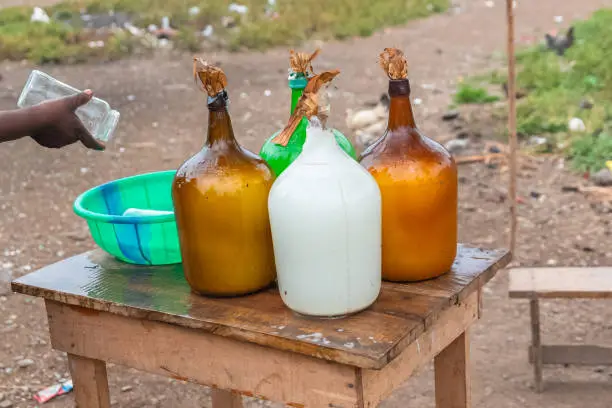
Quick facts: Palm wine is a naturally fermented alcoholic drink tapped directly from palm trees. It’s cloudy, off-white, mildly sweet when fresh, and grows sharper and more sour the longer it ferments. It has real cultural weight in Nigeria — used in traditional weddings, introduction ceremonies, and title-taking events — not just consumed as a casual drink.
In a lot of villages across southern Nigeria, mornings used to start with the sound of a tapper climbing a palm tree before sunrise, gourd in hand, collecting what had dripped overnight. That drink — sharp, slightly fizzy, unmistakably alive — is palm wine, and it’s one of the oldest fermented beverages in West Africa.
What is palm wine, exactly?
Palm wine is the naturally fermenting sap of palm trees, most commonly the raffia palm or oil palm. A tapper cuts into the tree’s flower stalk or trunk, and the sap drips out and is collected in a container — traditionally a calabash gourd, though plastic jerry cans have largely replaced it in practice. Because the sap starts fermenting the moment it’s exposed to wild yeast in the air, palm wine begins developing alcohol content almost immediately after collection, with no brewing process required.
Is palm wine alcoholic?
Yes. Fresh palm wine, collected within a few hours of tapping, is only mildly alcoholic — often compared to a light beer. Left to sit longer, the natural fermentation continues, and the alcohol content rises while the flavor turns increasingly sour and tangy. This is exactly why palm wine has a reputation for being unpredictable: the same tree, tapped on the same morning, can taste completely different by evening.
What does palm wine taste like?
Fresh palm wine has a mild sweetness, a slight fizz from natural carbonation, and a faintly milky, nutty undertone. As fermentation progresses, the sweetness fades and a distinct sourness takes over, similar in direction to how a young cider sharpens with age, though the flavor itself is unlike anything grape or grain-based. Most people who grew up around it develop a strong preference for one stage over the other — some insist it’s only good fresh, others prefer it a day or two in, once the sourness kicks in.
Does palm wine have any health benefits?
Palm wine is often discussed in Nigerian households as having some nutritional upside compared to distilled spirits or bottled beer — it’s unprocessed, contains some natural vitamins and minerals from the sap itself, and in small quantities has traditionally been considered a digestive aid. None of this makes it a health drink; it’s still an alcoholic beverage, and its natural, unfiltered fermentation process actually makes it more perishable and less consistent in alcohol content than a manufactured drink, which is worth knowing before treating any “benefits” claims as medical fact.
Why is palm wine served in a calabash?
The calabash — a hollowed, dried gourd — is the traditional serving vessel for palm wine, and it’s not just aesthetic. Calabashes were the original tapping and storage containers before plastic became widespread, and serving palm wine in one at weddings, title-taking ceremonies, and other cultural events is a deliberate nod to tradition rather than a random styling choice. At a traditional Nigerian wedding, the bride is often given a calabash of palm wine to find and hand to her chosen husband among the guests — a well-known ceremonial moment in many southern Nigerian wedding traditions. The size and decoration of the calabash used can also signal the importance of the occasion, with larger, more elaborately carved gourds reserved for major ceremonial moments rather than everyday drinking.
Can you get real palm wine in the USA, UK, or Canada?
This is genuinely the hardest part of recreating this experience abroad. Palm wine ferments so quickly and unpredictably that fresh, tapped palm wine essentially doesn’t survive international shipping in its truest form — what you’ll find at African grocery stores across the US, UK, and Canada is typically a bottled, pasteurized, or reconstituted version, sold under brand names, designed for a longer shelf life. It captures the flavor reasonably well but isn’t identical to the fresh, actively-fermenting version served straight from a calabash back home. Some diaspora communities with access to palm trees (parts of Florida and similar climates, for instance) have small informal tapping traditions, but this remains rare rather than the norm.
Is bottled palm wine the same as fresh palm wine?
Not exactly, but it’s the realistic option for almost everyone outside West Africa. Bottled versions are typically pasteurized to stop the fermentation process at a fixed point, which means they lack the shifting, evolving character of fresh palm wine — you get one consistent flavor and alcohol level rather than the drink changing over the course of a day. Some bottled versions also add sugar or carbonation to more closely mimic the fizz and sweetness of a freshly tapped batch, which purists sometimes see as a step away from the original but which makes the drink more approachable for a first-time taster. It’s a fair introduction to the flavor profile, just not a perfect substitute for the real thing.
What is “The Palm-Wine Drinkard”?
Worth a quick mention since it comes up in searches: The Palm-Wine Drinkard is a 1952 novel by Nigerian author Amos Tutuola, widely considered one of the first African novels published in English to gain major international attention. It follows a man whose life revolves entirely around drinking palm wine, blending Yoruba folklore with a surreal, dreamlike narrative. It’s a literary reference rather than a drink itself, but it’s a genuinely significant piece of Nigerian cultural history worth knowing if the name keeps showing up alongside your palm wine searches.
Does it matter which tree the palm wine comes from?
Yes, and this is something most casual drinkers never realize. Raffia palm and oil palm both produce sap, but the taste and yield differ noticeably. Raffia palm wine tends to be lighter, sweeter, and more delicate, while oil palm wine is typically stronger, more robust in flavor, and taps at a higher yield per tree — one reason oil palm is more commonly used commercially. In some regions, date palms are also tapped, producing yet another distinct flavor profile. Regional preference in Nigeria often comes down to which palm variety grows locally, which is part of why palm wine tastes noticeably different depending on which part of the country — or which part of West Africa — it comes from.
How is palm wine actually tapped?
The process itself hasn’t changed much in generations. A tapper climbs the palm tree, often using a rope or belt looped around the trunk and their body for support, and makes a careful incision near the flowering stalk or the crown of the tree. A container is tied or positioned below the cut to catch the sap as it drips out, and the tapper returns — sometimes twice a day — to collect what’s accumulated and reopen or maintain the cut for continued flow. A single tree can typically be tapped productively for weeks before it needs rest or the tapping site shifts, and skilled tappers develop a real feel for how much to cut and how often to return without damaging the tree beyond recovery. It’s physically demanding, often dangerous work, and tapping remains a specialized trade passed down within families in many palm wine-producing regions.
What is palm wine traditionally served with?
Palm wine shows up constantly at social and ceremonial gatherings, often alongside kola nut — the two are frequently presented together as a gesture of hospitality to visiting guests, a tradition with deep roots across many Nigerian and West African cultures. At more casual gatherings, it’s commonly paired with roasted or grilled snacks like suya, roasted plantain, or peanuts, the saltiness and heat of the food playing well against palm wine’s sweetness or tang depending on how fresh it is. It’s rarely served as a standalone drink without some kind of food or ceremonial context nearby.
Where can you find palm wine near you?
Bottled and pasteurized palm wine is stocked at many African grocery stores in cities with a sizable Nigerian or West African community across the US, UK, and Canada. (See our directory of African grocery stores by city to find one near you.)
The short version: palm wine is a naturally fermenting, culturally significant drink that changes character by the hour, best understood as something tied to ceremony and tradition rather than just an alcoholic beverage — and something you’re more likely to encounter bottled than fresh once you’re outside West Africa.