 US,
US,  UK
UK  Canada
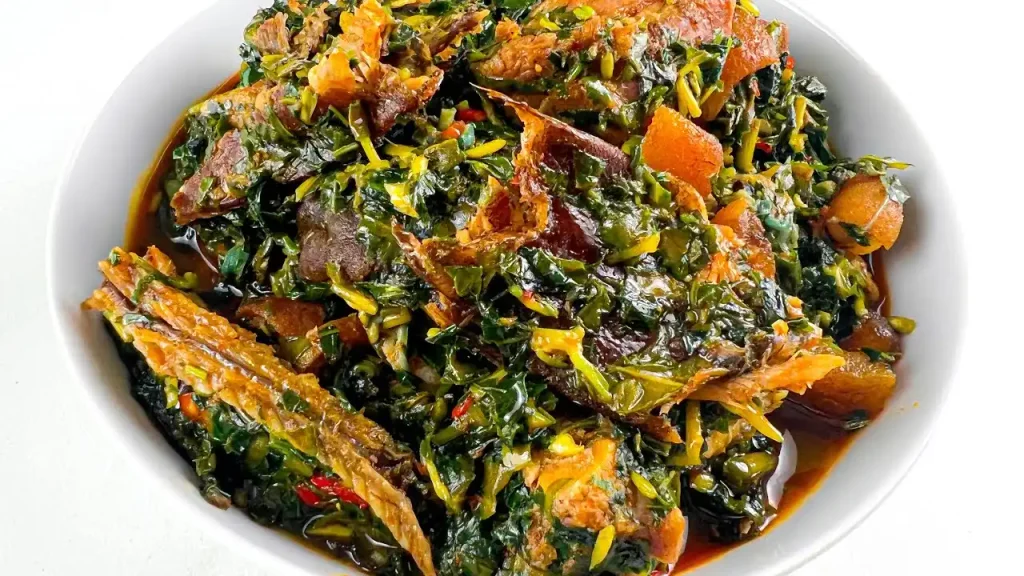
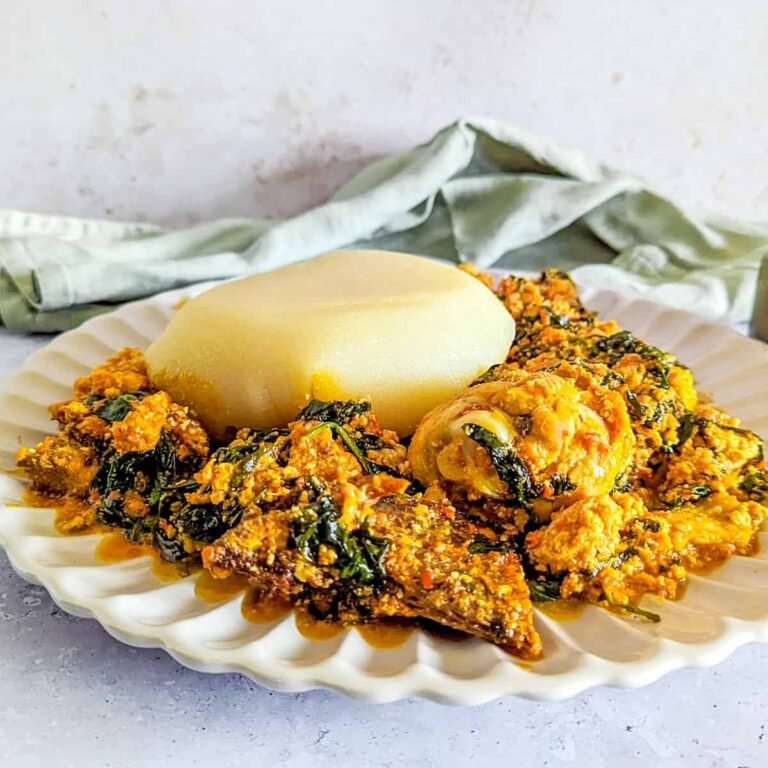
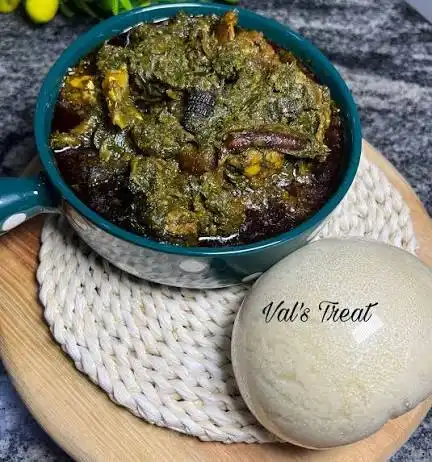
Edikaikong soup, sometimes spelled edikang ikong, comes from the Efik and Ibibio people of Akwa Ibom and Cross River states, and it stands out even among Nigeria’s already vegetable forward soups for just how dense with greens it actually is.
What Makes Edikaikong Different
Where a lot of Nigerian soups use one primary leafy green, edikaikong combines two, waterleaf and ugu (pumpkin leaves), in genuinely large quantities relative to the other ingredients. The result is a soup that’s noticeably more vegetable dense than something like egusi or ogbono, with meat, fish, and stockfish playing a supporting role to the greens rather than the other way around. It’s often cited as one of the more nutrient rich soups in Nigerian cooking specifically because of how much actual vegetable content goes into a single pot.
If you live in the United States, United Kingdom or Canada, finding every traditional ingredient may not always be easy. Fortunately, you can still prepare a delicious version of Edikaikong soup using ingredients available from African grocery stores, international food markets and, when necessary, carefully chosen supermarket substitutes.
This guide explains how to cook Edikaikong soup step by step, the traditional ingredients you need, which ingredients can be substituted, where to look for them in the US, UK and Canada, and how to avoid common mistakes when preparing the soup.
AUTHENTIC EDIKANG IKONG SOUP| AKWAIBOM STYLE
Edikaikong Soup Ingredients
Serves 4 to 6
- 2 cups waterleaf, chopped
- 2 cups ugu (pumpkin leaves), chopped
- 1/2 cup palm oil
- 1 lb assorted meat (beef, goat meat, tripe), cut into chunks
- 1/2 lb stockfish or dried fish
- 1/4 cup ground crayfish
- 2 to 3 scotch bonnet peppers, to taste
- 1 onion, chopped
- 2 seasoning cubes
- Salt to taste
How to Make Edikaikong Soup
- Season and boil the assorted meat with chopped onion, a seasoning cube, and salt until tender, reserving the stock.
- Heat the palm oil in a pot and add the reserved stock along with the cooked meat, stockfish, and dried fish.
- Stir in the ground crayfish and blended or chopped pepper, then simmer for 10 to 15 minutes to let the flavors combine.
- Add the waterleaf first, since it releases a fair amount of liquid as it cooks, and let it wilt down for a few minutes.
- Add the ugu and stir through, cooking for another 5 minutes, just until the greens are tender but still have some texture rather than turning fully soft.
- Adjust salt and the second seasoning cube to taste, then serve hot.
Why the Order of Vegetables Matters
Waterleaf and ugu behave differently when cooked, and adding them in the wrong order or at the wrong time genuinely affects the final result. Waterleaf releases significant liquid as it wilts, which is part of why it goes in first, giving that liquid time to cook down slightly rather than leaving the finished soup watery. Ugu is sturdier and holds its texture better, so adding it later keeps it from overcooking into mush by the time the soup is done.
Edikaikong vs Efo Riro
These two get compared constantly since both are leafy, vegetable forward soups, but they come from different regions and traditions. Efo riro is a Yoruba dish built on a proper fried tomato and pepper base with spinach or ugu stirred through it. Edikaikong skips the tomato base almost entirely and leans on the sheer volume of two combined leafy greens instead, giving it a noticeably different texture and a more purely vegetable forward character than efo riro’s more sauce driven profile.
Making Edikaikong Soup Outside Nigeria
Waterleaf is the ingredient most likely to require a real search, since it’s a fresh, somewhat delicate green that doesn’t always travel or store as well as sturdier vegetables, and availability can be inconsistent even at African grocery stores. Spinach is a commonly used substitute when waterleaf genuinely isn’t available, though it changes the texture and flavor somewhat. Ugu itself is increasingly available frozen across the US, UK, and Canada, which is a reasonable substitute for fresh when needed. Our Where to Buy guides are worth checking for country specific sourcing.
Where Edikaikong Comes From
Edikaikong is deeply tied to Efik and Ibibio culinary tradition in Akwa Ibom and Cross River states, part of Nigeria’s southeastern coastal region. It’s historically been associated with celebration and status, since a genuinely well made pot requires a significant quantity of both vegetables and quality protein, making it a dish that signals generosity and abundance at gatherings rather than a purely everyday meal. Its reputation has spread well beyond its region of origin, and it’s now recognized and cooked across Nigeria, though it remains most strongly identified with the southeast specifically.
Edikaikong Soup Ingredients
For approximately six to eight servings, you can use:
| Ingredient | Recommended Quantity | Alternative Where Necessary |
|---|---|---|
| Ugu/fluted pumpkin leaves | 5–6 cups sliced | Spinach, kale or suitable sturdy greens |
| Waterleaf | 3–4 cups sliced | Spinach, lamb’s lettuce/mâche or tender greens |
| Beef or goat meat | 1 kg / 2.2 lb | Lamb or another preferred meat |
| Stockfish | 1 medium piece | Smoked fish |
| Dried fish | 1–2 pieces | Smoked mackerel or similar smoked fish |
| Cow tripe | Optional | Omit if unavailable |
| Cow skin/ponmo | Optional | Omit if unavailable |
| Periwinkles | 1 cup | Sea snails or omit |
| Ground crayfish | ½ cup | Ground dried shrimp |
| Red palm oil | ¾–1 cup | Authentic palm oil preferred |
| Scotch bonnet pepper | 2–3 | Habanero pepper |
| Seasoning/bouillon | To taste | Preferred bouillon |
| Onion | 1 medium | Optional according to preference |
| Salt | To taste | — |
| Meat stock | Small amount | Beef stock |
The most important rule when preparing Edikaikong soup is: Do not make it watery. The vegetables naturally release moisture while cooking, particularly waterleaf and spinach.
What If I Can’t Find Ugu or Waterleaf?
This is one of the most important questions for people preparing Edikaikong soup in the US, UK and Canada. Traditional ingredients should be your first choice whenever they are available. However, alternatives can help when you cannot find them locally.
Best Substitute for Ugu in Edikaikong Soup
Ugu is also called fluted pumpkin leaf. It may be available fresh or frozen from African grocery stores. If you cannot find it, possible substitutes include:
Spinach
Spinach is probably the easiest alternative to find in supermarkets across the United States, United Kingdom and Canada. However, spinach is softer and releases considerably more water than ugu. If using frozen spinach, thaw and squeeze it thoroughly before adding it.
Kale
Kale has a firmer texture and can be useful when you want a sturdier leafy green. Remove hard stems and slice the leaves relatively thinly before cooking.
Collard Greens
Collard greens are particularly easy to find in many parts of the United States. Their texture is firmer than spinach, so slice them thinly and allow slightly more cooking time if necessary. You can also combine a sturdier vegetable such as kale or collard greens with spinach instead of relying entirely on one vegetable.
Best Substitute for Waterleaf
Waterleaf has a softer texture and naturally releases moisture into the soup. Finding genuine waterleaf may be more difficult outside African specialty markets. Possible alternatives include:
Spinach
Fresh spinach can provide some of the tender texture associated with waterleaf.
Lamb’s Lettuce or Mâche
Lamb’s lettuce, often labelled mâche, can be another option depending on availability. It is more commonly found in some European and UK supermarkets than in others.
Combination of Tender Greens
When authentic waterleaf is unavailable, combining tender spinach with a sturdier green can give you a more balanced texture. Remember: A soup made with substitutes can still be delicious, but its flavor and texture will not be exactly the same as Edikaikong prepared with authentic ugu and waterleaf.
Traditional Edikaikong vs Supermarket-Friendly Edikaikong
For the most traditional flavor, use:
Ugu + Waterleaf
If traditional vegetables are unavailable, an adapted version could use combinations such as:
Spinach + Kale or: Spinach + Collard Greens
The important thing is to understand that these are substitutions. They help you recreate the style and texture of the soup using ingredients available locally, but they do not turn spinach or kale into traditional ugu or waterleaf. If an African grocery store near you carries authentic frozen vegetables, try those before choosing supermarket substitutes.
Common Edikaikong Soup Mistakes
Why Is My Edikaikong Soup Watery?
The most common reasons are:
- Adding too much water to the meat
- Failing to drain your vegetables
- Using frozen spinach without squeezing out excess water
- Adding extra stock unnecessarily
To fix a watery Edikaikong soup, cook it uncovered for a short period to allow excess liquid to evaporate.
However, prevention is better.
Start with very little liquid.
Why Is My Edikaikong Soup Too Dry?
Although Edikaikong should not be watery, it should still have enough moisture and palm oil to coat the vegetables.
If it becomes excessively dry, add a very small amount of meat stock or additional palm oil.
Do this gradually.
Can I Use Only Spinach for Edikaikong Soup?
Yes, you can prepare an adapted vegetable soup using spinach alone.
However, the texture will differ significantly from traditional Edikaikong because spinach is much softer and releases more water.
A combination of spinach and a firmer vegetable such as kale or collard greens usually produces a better balance.
Why Did My Vegetables Become Too Soft?
They were probably cooked for too long.
Leafy vegetables do not need extended cooking once added to the soup.
Add them towards the final stages.
Why Does My Soup Lack Flavor?
Edikaikong gets much of its depth from ingredients such as:
- Meat stock
- Crayfish
- Stockfish
- Smoked fish
- Palm oil
- Pepper
If several of these ingredients have been omitted, you may need to adjust your seasoning carefully.
What to Eat With Edikaikong Soup
Edikaikong soup can be served with many West African staples.
Pounded Yam and Edikaikong Soup
Pounded yam is an excellent accompaniment because its mild flavor pairs well with the rich vegetable and seafood flavors of the soup.
Fufu and Edikaikong Soup
Fufu is another popular option.
Pieces of fufu can be used to scoop the thick vegetable soup.
Eba and Edikaikong Soup
Eba is made from garri and works particularly well with vegetable soups.
Semolina or Semovita
Semolina-based swallows can also be served with Edikaikong.
How to Store Edikaikong Soup
Allow leftover soup to cool before transferring it into an airtight container.
Refrigerate portions you plan to eat within the next few days.
For longer storage, Edikaikong soup can be frozen.
Freezing it in individual portions makes reheating easier because you only need to thaw the amount you intend to eat.
When reheating, heat the soup thoroughly but avoid repeatedly cooking it for long periods, as this may continue softening the vegetables.
Frequently Asked Questions About Edikaikong Soup
Is It Edikaikong or Edikang Ikong?
Both spellings are widely used when referring to the soup.
You may encounter Edikaikong, Edikang Ikong and other minor spelling variations when searching for recipes or ingredients online.
What Is Edikaikong Soup Made Of?
Traditional Edikaikong soup is mainly prepared with ugu or fluted pumpkin leaves, waterleaf, palm oil, crayfish, pepper and various meats and seafood.
Stockfish, dried fish, cow skin and periwinkles may also be included.
What Is the Difference Between Ugu and Waterleaf?
Ugu, or fluted pumpkin leaf, has a firmer leafy texture.
Waterleaf is softer and contains more moisture.
Using the two vegetables together helps create the characteristic texture of Edikaikong soup.
Can I Use Spinach Instead of Waterleaf?
Yes.
Spinach can be used as an alternative when waterleaf is unavailable.
Drain it thoroughly because spinach can release considerable moisture.
Can I Use Spinach Instead of Ugu?
Spinach can be used when ugu cannot be found, although the texture is softer.
For an adapted version, consider combining spinach with kale or collard greens.
Can I Make Edikaikong Without Waterleaf?
Yes.
You can prepare an adapted version without waterleaf, although traditional Edikaikong generally uses a combination of leafy vegetables.
Can I Cook Edikaikong Without Periwinkle?
Yes.
Periwinkles are optional in many home recipes.
You can omit them if they are unavailable or you do not eat shellfish.
Can I Cook Edikaikong Without Stockfish?
Yes.
Although stockfish contributes additional flavor, the soup can be made without it.
Smoked fish is another option.
Can I Make Edikaikong Soup With Chicken?
Yes.
Chicken can be used instead of beef or goat meat if preferred.
Keep in mind that this changes the traditional flavor profile somewhat.
Where Can I Buy Ugu Leaves in the USA?
Check African, Nigerian and West African grocery stores.
Fresh availability varies, but frozen ugu is sometimes easier to find.
Online African grocery retailers may also carry it.
Where Can I Buy Ugu Leaves in the UK?
African and Afro-Caribbean grocery stores are good places to look for fresh or frozen ugu in the UK, particularly in larger cities.
Where Can I Buy Ugu Leaves in Canada?
Check Nigerian, African and international grocery stores in cities such as Toronto, Calgary, Edmonton, Ottawa and Winnipeg.
Frozen ugu may be easier to find than fresh leaves.
Final Thoughts on Making Edikaikong Soup
Learning how to cook Edikaikong soup is easier once you understand what makes the dish distinctive: a generous amount of leafy vegetables, rich red palm oil, well-seasoned proteins, crayfish and very little unnecessary water.
For the most authentic version, prepare your Edikang Ikong soup with ugu and waterleaf.
If those ingredients are unavailable where you live, suitable vegetables such as spinach, kale, collard greens or lamb’s lettuce can help you prepare an adapted version using ingredients available in supermarkets across the United States, United Kingdom and Canada.
Before substituting the traditional vegetables, however, check African grocery stores and online African food retailers. Fresh or frozen authentic ingredients may be easier to find than you expect.
NigerianFoodSupplies.com helps you discover African grocery stores, traditional food ingredients, practical ingredient substitutes and food-shopping resources across the US, UK and Canada so you can find what you need to prepare authentic African dishes at home.